

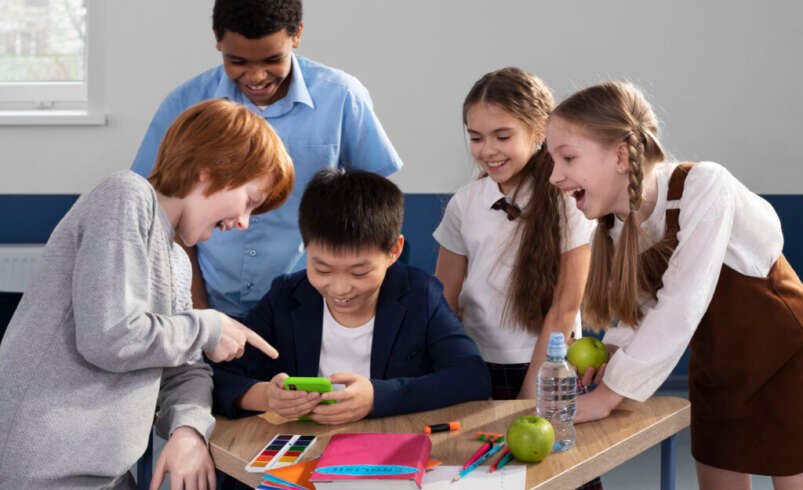

For some people, friendship happens automatically. They walk up to a group, say something, and they are in. For others, that same moment feels like being handed a script in a language they were never taught. A young child hovers at the edge of the playground. A teenager stands just outside a cluster of classmates. An adult sits quietly through a gathering, unsure how to join. The desire to connect is real; the reliable way to reach it is what is missing. That is precisely where focused support makes a difference.
The Reasons Social Situations Get Overwhelming
Social behavior is not a single skill. It is dozens of small ones firing at once: reading a facial expression, catching a tone, timing a response, and knowing the unwritten rules of a specific room. For a person with autism, any one of those can be tricky, and all of them together can feel like too much.
When those signals get missed, the fallout is usually social. A joke lands wrong, a turn gets skipped, a peer walks away confused. Over time, someone may start avoiding the situations that keep going sideways, which can look like disinterest when it is really self-protection.
What Structured Social Support Actually Looks Like
Good Tucson social skills training does not ask a person to simply try harder. It breaks social interaction into teachable pieces and rebuilds them, one at a time, using the principles of Applied Behavior Analysis. A skill is introduced, modeled, and rehearsed before it ever has to be used live.
A typical group session follows a steady rhythm, and that predictability is a feature, not a coincidence. It opens with free play or a chance to catch up, which lets everyone settle in before the real work begins. A structured lesson on one specific social behavior follows, with discussion and modeling. Then comes role-play, giving each participant a low-pressure chance to practice before a group game puts the new skill to use in a real moment, and a short closing helps everyone transition out.
Turning Practice Into Real Connection
The point of all this rehearsal is not a polished performance inside one room. It is generalization, the moment a skill shows up somewhere new: at the lunch table, in the group chat, at a family gathering, or in the workplace. Sessions are built so lessons connect to the situations a person actually lives in, with repeated chances to carry each skill outward until it holds.
Progress here rarely runs in a straight line, and that is normal. Someone might master turn-taking while still finding group games hard, or grow chatty while still learning when to pause.
Support That Fits Every Age and Stage
What helps a young child is not what helps a teenager, and neither is quite what helps an adult. This support is built for people across the lifespan, from the earliest days after a first diagnosis through adolescence and well into adulthood, rather than aimed at one age group with everyone else as an afterthought.
Younger children build early confidence through play, laughter, and games that reward sharing. Teens practice starting conversations, reading cues, and holding onto friendships. Adults focus on communication, self-advocacy, and everyday problem-solving at home, at work, and in the community. This is where thoughtful social skills therapy Tucson earns its keep: curriculum is modified to fit each participant, so the goals, topics, and pace all bend around the person.
Why Families Are Part of the Work
Parents, caregivers, and other loved ones see the whole picture: the morning routines, the sibling squabbles, the small wins nobody else notices. That vantage point makes families essential partners. When the skills practiced in a session get reinforced at home, they stop being isolated exercises and start becoming habits woven into daily life.
A Steady Path Toward Connection
Helping a person learn to connect is not about flipping a switch. It is about individualized support that meets each person where they are, a genuine partnership with the family, and patience with growth that comes gradually. Well-run social skills training in Tucson keeps all three in view, building steadily toward something durable rather than chasing quick fixes.
The goal is the same for everyone: to move, step by step, toward the friendships and belonging they have wanted all along. With the right support, that foreign language slowly becomes one a person can speak with growing ease and genuine confidence.