
Two summer thunderstorms back to back, and the flowerbed along your front walk turns into a trench of red mud. It’s a familiar sight across Lexington, SC, and it usually points to gutters that are undersized, poorly pitched, or both. Our team at WW Gutters sees this on homes of every age, and a new gutter install is almost always where the problem finally gets fixed properly. What follows covers what the job involves, what Lexington’s weather adds to the picture, and what to ask before you sign anything.
What a Proper Gutter Installation Actually Includes
A good installation is more than hanging a trough from the roof edge. The crew removes the old system, then inspects the fascia board and drip edge underneath before anything new goes up. Next comes measuring: the roof’s size, pitch, and valleys decide whether a home needs standard 5-inch K-style gutters or 6-inch gutters with larger downspouts. Most residential work now uses seamless gutters, which are formed on site from a coil of metal so each run has no joints along its length where leaks start.
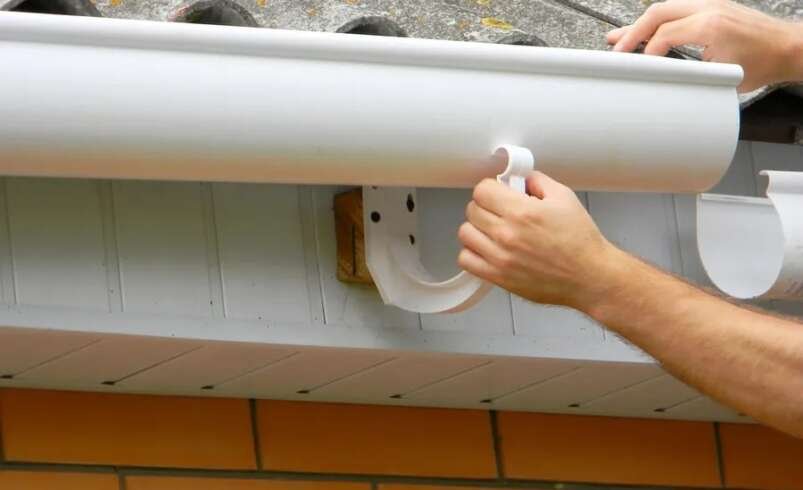
Hidden hangers go in every two feet or so, and each run gets a slight pitch toward the downspouts. Downspouts finish with extensions or buried drain lines that carry water well past the foundation. Material matters too. An aluminum gutter install in Lexington, SC is the usual choice across the Midlands because the metal doesn’t rust in humid air, accepts a baked-on color finish, and costs far less than copper. Steel stands up well to ladders and branches, but its coating can chip and rust.
Gutters get blamed for problems they can’t solve alone. They collect and carry water, but they cannot correct a yard that slopes toward the house or a roof with failing flashing. Pairing them with a drip edge, a gutter apron behind the trough, and properly graded soil is what keeps water out of the fascia and the foundation.
In Lexington, SC, we’ve noticed that most homeowners only start thinking about gutters after water has already stained the siding or found its way into the crawlspace. By that point, the gutters are rarely the only thing that needs attention. Fascia, soffit, and even landscaping often need repair alongside them.
The Real Challenge in Lexington: Pine Needles, Red Clay, and Fast Rain
Afternoon thunderstorms here can drop an inch of rain in under an hour, and a gutter has only seconds to move that water before it spills over the edge. Loblolly pines shed needles all year. Oaks and sweetgums add their own debris, and spring pollen coats everything in yellow. Pine needles cause the most trouble because they lie flat across the trough, knit together, and hold water against the fascia. Remnants of late-summer tropical systems can stack several days of rain on top of that.
The soil makes it worse. Red clay drains slowly, so a downspout that empties beside the foundation leaves the ground saturated for days. Washed-out mulch and a cut channel at the downspout outlet are early warnings that water has nowhere good to go.
A client in Lexington, SC reached out when they noticed paint peeling along the fascia above their back patio, and a spot on the board that felt soft under a thumb. Years of overflow had come from needle-clogged downspout elbows. When the crew pulled the old gutters down, the rot turned out to run behind two sections of fascia. That wood was replaced first, and the new downspouts were extended to a graded area well away from the patio.
One objection almost never gets a straight answer: “Won’t new gutters just clog again?” Yes, eventually, because any open trough under pine trees will collect debris. What changes is how quickly the system clears itself and how easy it is to maintain. Correct pitch and larger downspouts handle needles far better than a sagging, undersized setup, and a gutter maintenance service once or twice a year keeps small buildups from becoming overflow. Guards help, but they are not a cure, and anyone promising “never clean again” is overselling.
How WW Gutters Approaches Installation Differently
Most quotes start with a catalog of colors and materials. At WW Gutters, the process starts with the roof and the ground instead. The crew checks the roof’s drainage area, looks at where each downspout can discharge, and probes the fascia for soft wood before giving a final number. A price that ignores those things tends to grow once the old gutters come down.
One gap shows up on nearly every gutter page: where the water goes after it leaves the downspout. Plenty of articles cover gauge and color, yet very few talk about discharge points, and on red clay that detail decides whether a new system protects the house or just relocates the problem. A simple test helps. After installation, run a hose on the roof section above each downspout and watch where the water travels over the next few minutes. If it pools within a few feet of the foundation, the job is not finished.
Gutter sizing is the other overlooked piece. Roof valleys funnel water into a single corner, and a standard downspout there can overflow in a hard storm even when the rest of the run is fine. Adding a second downspout, or stepping up to a larger one at those spots, costs little at installation and a lot to fix later.
Practical Tips: What to Know Before You Decide
Compare quotes line by line, not by total. Working with clients in Lexington, SC, our team found that most price differences come down to details that never appear on a one-line estimate: aluminum thickness (.027 versus .032 inch), hanger spacing, downspout size, and whether rotted fascia gets repaired or covered over.
Timing is simpler than most people expect. A typical home takes about a day from teardown to cleanup, though steep two-story rooflines and fascia repairs can stretch that.
Ask how the old system will be handled, too. Crews should haul away the old gutters and downspouts, seal the fascia where old hangers came out, and leave the yard clear of metal scraps and screws. A magnet sweep of the lawn is a small step that tells you a crew respects the property. Drip edge matters as much: water that slips behind the trough rots fascia no matter how good the gutters are.
Check your HOA rules before you order anything. Many neighborhoods in and around Lexington, especially near Lake Murray, set limits on gutter color and style, and finding that out after the metal is cut means delays or a redo. A short email to the HOA, with the color sample attached, usually settles it within days.
Last, get the scope in writing: gutter pitch, downspout count and sizes, the extension or drain plan, fascia repair terms, warranties on materials and workmanship, and who handles cleanup. A contractor who writes that down is telling you they plan to stand behind the work.
Conclusion
A good system proves itself in the first heavy storm, not on installation day. Walk the roofline during or right after the next downpour and watch for overflow at corners, sagging runs, and water pooling near the foundation. If what you see worries you, WW Gutters handles gutter replacement for homes in Lexington, SC, and can walk the property with you before any quote is written. Ask for the fascia check and the downspout plan up front, and you will know exactly what you’re paying for.
FAQs
How much does it cost to put new gutters on a house in Lexington, SC?
Most homes in the Lexington area land between $1,500 and $4,000 for seamless aluminum gutters, depending on roof size, number of corners, downspout count, and whether fascia needs repair. Price per foot varies by gauge and style. Ask for a written quote that lists materials, hanger spacing, and what happens if rotten wood turns up.
How do I know a gutter contractor is legit?
Ask for proof of South Carolina contractor licensing where it applies and a certificate of general liability insurance, then check recent reviews and photos of local work. A trustworthy contractor will explain the fascia and downspout plan in writing and won’t pressure you to sign the same day.
How long do aluminum gutters last in Lexington?
Seamless aluminum typically lasts 20 to 30 years, since it resists rust in humid air. Lifespan in the Midlands depends on gauge, hanger spacing, and how often debris gets cleared. Standing water under pine needles and loose hangers cause more early failures than the metal itself does.
Do gutter guards work with pine needles?
They help, but none are maintenance-free. Fine micro-mesh stops most pine needles, though pollen and shingle grit can still form a film on top that needs a brush or rinse. Cheaper perforated covers let small debris through. Plan on a quick check each spring and after heavy leaf or needle drops.
How often should gutters be cleaned in Lexington?
Twice a year is a good baseline in Lexington: once after spring pollen and pine drop, and once after leaves fall in late autumn. Homes under heavy pine cover may need a third visit. A gutter maintenance service can also flush downspouts and check hangers, which are the parts homeowners usually miss.