

Commercial roof repairs are an important part of maintaining a safe and functional building. However, before scheduling repair work, building managers should understand the condition of the roofing system and identify the areas that may need professional attention.
A structured commercial roof inspection checklist Pierre SD can help building managers organize their observations, document visible concerns, and communicate more effectively with a roofing professional.
Why Inspect a Commercial Roof Before Repairs?
A visible leak does not always reveal the exact source of a roofing problem. Water can travel through different parts of a roofing assembly before becoming noticeable inside the building.
Inspecting the roof before scheduling repairs can help building managers understand whether the concern involves the membrane, seams, flashing, drainage, penetrations, or another component.
The goal is not to diagnose complex roofing problems independently. Instead, an inspection can provide useful information for a professional assessment.
1. Check the Main Roofing Surface
The first step in a commercial roof inspection checklist Pierre SD is examining the overall roof surface.
Building managers should look for visible:
- Cracks
- Punctures
- Tears
- Loose materials
- Blistering
- Unusual wear
- Deteriorated areas
Photographs of unusual areas can be useful when discussing the roof with a professional.
2. Inspect Seams and Membrane Connections
Many commercial roofing systems use membranes that rely on properly sealed seams.
Managers should look for visible lifting, separation, cracking, or deterioration around seams. A damaged seam does not necessarily mean the entire roof needs replacement, but it should be professionally evaluated when the problem appears significant.
3. Examine Flashing
Flashing is found around many vulnerable areas of a commercial roof, including walls, roof edges, vents, pipes, curbs, and HVAC equipment.
Look for:
- Loose flashing
- Gaps
- Corrosion
- Deteriorated sealants
- Visible movement
- Damaged transition areas
Flashing problems can contribute to moisture intrusion, so they should be included in any commercial roof inspection checklist Pierre SD.
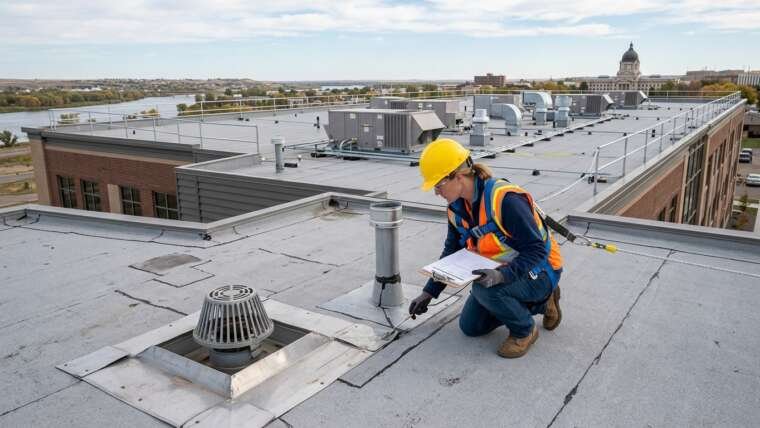
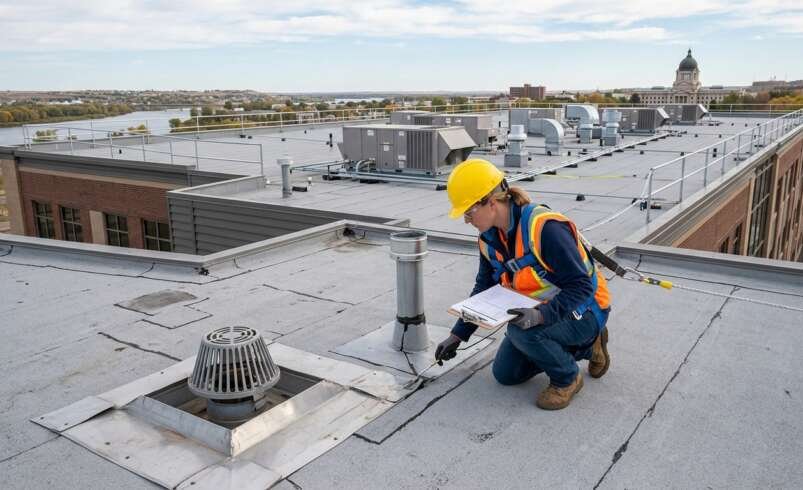
4. Check Roof Drains and Drainage Paths
Drainage is especially important for commercial low-slope roofs. Building managers should inspect drains, gutters, scuppers, and other drainage points for accumulated leaves, branches, dirt, or debris.
Blocked drainage can contribute to water accumulation. If the same area repeatedly holds water, the issue should be discussed with a roofing professional.
5. Look for Ponding Water
After precipitation, check whether water remains on the roof in particular areas.
Temporary moisture may occur, but recurring ponding can indicate a drainage or roof-surface concern. Managers should document the location and frequency of persistent water accumulation.
6. Inspect Around HVAC Equipment
Commercial buildings frequently have HVAC equipment located on or near the roof. Maintenance work around these units can sometimes affect roofing materials.
Check the surrounding areas for punctures, damaged flashing, loose components, or visible moisture concerns.
7. Check Roof Penetrations
Pipes, vents, skylights, HVAC components, and other features can create openings through the roofing system.
As part of a commercial roof inspection checklist Pierre SD, managers should examine the areas surrounding these penetrations for visible deterioration, gaps, damaged seals, or signs of moisture.
8. Look for Roof Debris
Branches, leaves, dirt, and other debris can hide damage and interfere with drainage.
Before scheduling repairs, building managers should note whether debris is concentrated around specific areas or drainage points. Sharp objects should also be removed carefully because they may create risks for certain roofing materials.
9. Check Roof Edges
Roof edges can experience significant exposure to wind and weather. Managers should look for loose, damaged, or deteriorated edge components.
If edge materials appear displaced following strong weather, professional inspection is recommended.
10. Check the Building Interior
A commercial roof inspection should not stop at the roof surface. Building managers should also check interior areas for signs that may indicate moisture intrusion.
Potential warning signs include:
- Ceiling stains
- Damp materials
- Peeling paint
- Water marks
- Musty odors
- Moisture around roof penetrations
Interior signs can provide useful information, although they do not always reveal the exact source of a leak.
11. Review Previous Roof Repairs
Before scheduling new repairs, managers should review available maintenance records. Previous repairs may provide important information about recurring concerns.
Check whether the current problem appears near a previous repair location and document any changes that have occurred since the last inspection.
12. Document the Roof’s Condition
Good documentation can make the repair process more efficient.
A building manager can record:
- Inspection date
- Problem locations
- Photographs
- Visible damage
- Interior warning signs
- Previous repair areas
- Recurring drainage concerns
This information can help a roofing professional understand what the property manager has observed.
How Pierre SD Weather Can Affect Commercial Roofs
Commercial roofing systems in Pierre, SD experience changing weather conditions throughout the year. Wind, precipitation, temperature fluctuations, and seasonal exposure can contribute to normal roofing wear.
Building managers may want to pay particular attention to the roof after significant weather events. Visible changes around flashing, roof edges, drainage areas, and membrane surfaces can provide useful information for future maintenance.
When Should Repairs Be Scheduled?
Not every visible roofing issue requires immediate major repair work. However, recurring leaks, significant membrane damage, persistent ponding, damaged flashing, compromised seams, and unexplained interior moisture should receive professional attention.
A professional inspection can help determine whether the appropriate solution involves a minor repair, ongoing maintenance, restoration, or another approach.
Why a Checklist Helps Building Managers
A commercial roof inspection checklist Pierre SD gives building managers a consistent framework for reviewing important roof components.
Instead of focusing only on an obvious leak, the checklist encourages managers to consider the entire roofing system, including drainage, flashing, seams, penetrations, roof edges, and interior warning signs.
This broader approach can help create a clearer picture of the roof’s condition before repair decisions are made.
Professional Commercial Roofing Assistance in Pierre, SD
When a commercial roof needs professional inspection, maintenance, or repair, Weather All Roofing, Inc. can assist property owners and building managers in Pierre, South Dakota.
For professional roofing assistance, contact Weather All Roofing, Inc. at +1 605-224-7982 or visit 20492 Homestead Pl, Pierre, SD 57501, United States.
FAQs
What should a building manager check before commercial roof repairs?
Check the roof surface, seams, flashing, drainage, penetrations, roof edges, HVAC areas, ponding water, debris, and interior signs of moisture.
Why should a commercial roof be inspected before repairs?
An inspection can help identify visible problem areas and provide useful information to a roofing professional before repair work is scheduled.
Can a roof leak come from somewhere other than the visible stain?
Yes. Water can travel through roofing materials before becoming visible inside the building, so the location of an interior stain may not be the exact source of the problem.
How important are roof drains during an inspection?
They are very important. Blocked or ineffective drainage can contribute to recurring water accumulation on low-slope commercial roofs.
Should previous repairs be reviewed?
Yes. Reviewing previous repair records can help building managers identify recurring problems and provide useful background information to a roofing professional.
When should a commercial roofing professional be contacted?
Professional assistance is recommended when there are recurring leaks, significant roof damage, persistent ponding, damaged flashing, compromised seams, or unexplained interior moisture.