

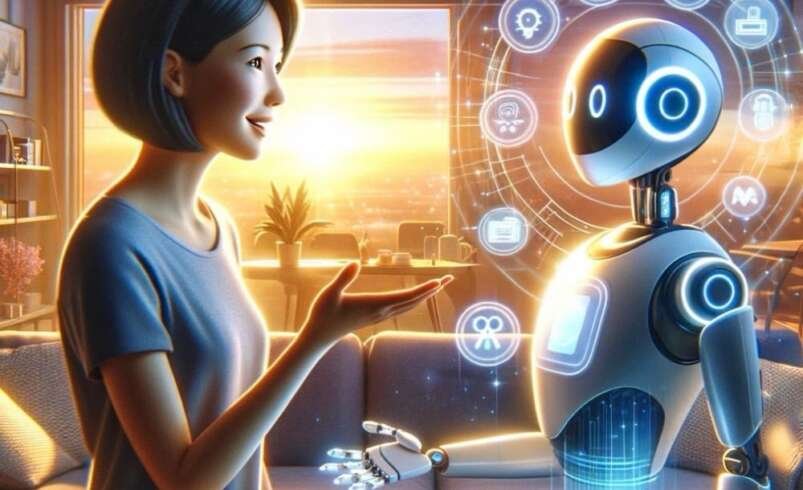

Artificial intelligence is moving beyond simple chatbots and becoming part of everyday digital work, creativity, entertainment, and communication. In 2026, new tools are giving creators, businesses, and ordinary users more ways to generate content, automate repetitive tasks, build digital characters, and work with information. The biggest changes are not limited to one category. We are seeing AI become more personalized, multimodal, and accessible across different platforms. Their growing capabilities are also changing how people choose software and create digital experiences. These developments make trends in artificial intelligence an important topic for anyone following modern technology.
This article looks at major AI trends and tools shaping digital creativity, productivity, personalization, and online experiences in 2026.
Smarter AI Assistants Are Becoming Everyday Work Tools
AI assistants are moving beyond basic question-and-answer functions. Modern tools can help with writing, coding, research organization, brainstorming, document analysis, scheduling, and content planning. Their usefulness comes from handling several connected tasks instead of producing a single response.
Similarly, many assistants can now work with text, images, files, audio, and other forms of information. This shift toward multimodal systems is one of the clearest trends in artificial intelligence because users no longer need separate software for every small task.
For bloggers and digital marketers, this can mean faster content planning and editing. For businesses, AI assistants can support customer communication, internal documentation, and routine workflows.
AI Image and Video Creation Is Becoming More Flexible
Visual generation remains another major area of progress. AI image tools can create characters, scenes, product concepts, illustrations, and social media visuals from simple descriptions. Video generators are also becoming more useful for short clips, creative storytelling, advertising concepts, and personalized media.
The growing availability of an AI porn creator also reflects how image-generation technology is being applied to adult-oriented digital content. Responsible platforms still need to address consent, age restrictions, privacy, and the misuse of real people’s likenesses.
Meanwhile, creators are gaining more control over style, character appearance, backgrounds, and visual continuity. This makes AI-generated media relevant for independent creators who may not have access to traditional production resources.
Personalized Digital Characters Are Getting More Sophisticated
Digital characters are another area receiving attention in 2026. AI companion services can create personalities designed around specific interests, conversational styles, and scenarios. Instead of interacting with a generic chatbot, users can shape a character with a more recognizable identity.
Secrets AI is part of this broader movement toward personalized AI experiences. Its companion-focused approach shows how AI can combine conversation, character creation, and visual customization within one digital environment.
Likewise, adult-oriented AI services are experimenting with personalized virtual characters. Search interest around AI girlfriend porn reflects part of this trend, although privacy, consent, age verification, and responsible content policies remain important considerations for users and developers.
AI Automation Is Changing Routine Digital Work
Automation is becoming another important part of trends in artificial intelligence. Instead of using AI only when a question needs an answer, people can now connect AI with repetitive workflows.
Common applications involve:
- Drafting and organizing documents
- Summarizing long information
- Sorting customer requests
- Generating marketing ideas
- Preparing content outlines
- Assisting with software development
- Organizing repetitive administrative tasks
In the same way, businesses are increasingly looking at AI agents that can perform several steps within a workflow. They can potentially reduce repetitive manual work while allowing people to focus on decisions that require judgment and creativity.
Voice and Multimodal Interaction Are Moving Forward
Text is no longer the only major way to interact with AI. Voice conversations, image inputs, document analysis, and real-time responses are making AI tools feel more flexible.
A person can provide an image and ask for an explanation, upload a document for analysis, or use voice to communicate naturally. This creates a smoother experience for users who may not want to type every instruction.
Especially for accessibility and mobile use, multimodal interaction can make AI applications easier to use. Consequently, trends in artificial intelligence are increasingly connected with the way people communicate with software rather than simply the technology behind it.
AI Tools Are Becoming More Useful for Independent Creators
Independent creators are also gaining access to tools that once required specialized teams. Writing assistants, image generators, video platforms, audio tools, coding assistants, and character-generation services can all support different stages of a creative project.
We can see this shift across blogging, social media, digital entertainment, marketing, and online publishing. A creator can develop an idea, produce supporting visuals, prepare promotional copy, and organize content with several AI-powered tools.
Secrets AI fits into this creator-focused movement through its emphasis on customizable virtual characters and AI-generated experiences. Still, users should compare privacy policies, pricing structures, content rules, and available customization before choosing a platform.
Privacy and Control Matter More as AI Becomes Personal
More personalization also creates a greater need for responsible data handling. AI applications may process conversations, uploaded files, preferences, images, or character settings. Users should therefore pay attention to how information is stored and handled.
Clearly, privacy is becoming part of the practical decision-making process when selecting AI software. Features may attract attention, but data controls, account security, content policies, and transparency can matter just as much.
As a result, trends in artificial intelligence are not only about what AI can create. They are also about how safely and responsibly those capabilities are delivered.
What These AI Developments Mean for Everyday Users
The direction of AI in 2026 points toward tools that are more personalized, interactive, and capable of handling several types of tasks. Rather than replacing every existing application, AI is increasingly being built into software people already use.
For users, this means there are more choices than before. Some tools focus on productivity, others on creativity, while companion and entertainment platforms focus on personalized interaction.
Ultimately, the most useful AI tool depends on the task, budget, privacy expectations, and level of control a user wants. Keeping track of trends in artificial intelligence can make it easier to recognize which developments offer practical value and which are simply temporary attention-grabbers.
Conclusion
AI in 2026 is moving toward more personalized assistants, richer multimedia creation, automated workflows, interactive characters, and natural voice-based communication. These trends are changing how people create content, manage routine work, and interact with digital services. We are also seeing stronger attention toward privacy, consent, security, and user control as AI becomes more personal. They show that the next stage of artificial intelligence is not limited to chatbots. Instead, AI is becoming part of broader digital experiences, giving users more creative options while making responsible technology choices increasingly important.