

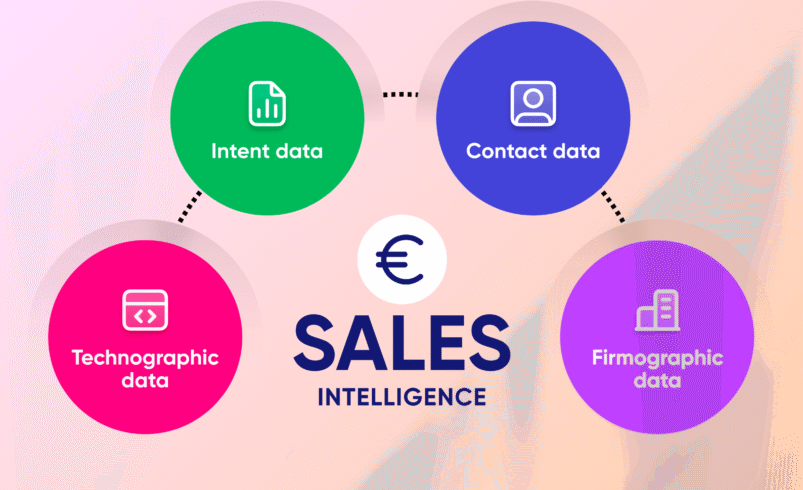

How Multidata Hub Helps Sales and Marketing Teams is closely connected to one of the biggest challenges in B2B growth: finding the right companies and contacts without wasting time on irrelevant or outdated information. Sales representatives need useful prospect information before starting conversations, while marketing teams need reliable business data to build focused audiences and campaigns.
Understanding How Multidata Hub Helps Sales and Marketing Teams also requires looking at how business data fits into the larger customer acquisition process. Multidata Hub presents data services that include B2B and B2C contact data, business emails, phone numbers, intent data, and data enrichment. These resources can support prospecting, segmentation, account research, and database management. Their effectiveness, however, depends on data quality, appropriate targeting, responsible use, and the company’s overall sales and marketing process.
Why Sales and Marketing Teams Need Better Business Data
B2B sales rarely begin with a random list of companies. Most successful prospecting processes start with an ideal customer profile.
A business may define its target market according to:
- Industry
- Company size
- Location
- Business model
- Revenue range
- Department
- Job title
- Specific business needs
Without organized information, finding companies that match these criteria can require substantial manual research.
Business data can provide a starting point. Instead of searching broadly, teams can use relevant company and contact attributes to narrow their potential audience.
This makes data useful not because it eliminates sales work, but because it can help salespeople and marketers focus their effort.
How Multidata Hub Helps Sales Teams
1. Supports B2B Prospect Identification
Sales teams need to find businesses that could realistically purchase their products or services.
For example, a company selling enterprise software may want to focus on organizations of a certain size and identify professionals involved in technology purchasing.
B2B data can help sales representatives identify companies and potential contacts that fit these requirements.
The key is to define the ideal customer profile before searching for prospects. Without clear criteria, even a large database can produce an unfocused list.
2. Helps Identify Relevant Professionals
Finding the right company is only one part of prospecting. Sales teams also need to identify people whose responsibilities are connected to the purchasing decision.
Depending on the product, this might include:
- Chief executives
- Sales leaders
- Marketing managers
- IT professionals
- Procurement teams
- Operations managers
- Finance professionals
The appropriate contact depends on the organization’s structure and the product being sold.
Using professional role information can help sales teams avoid contacting people who have little connection to the buying process.
3. Supports More Targeted Outreach
Generic sales messages often provide little reason for a prospect to respond.
Business information can give salespeople additional context before making contact. A representative can research the company, understand its industry, consider the person’s role, and then create a more relevant message.
For instance, an accounting software provider may communicate differently with a finance director than with an operations manager.
Data does not replace personalization. It provides information that can make personalization more practical.
4. Helps Prioritize Prospects
A sales team may have hundreds or thousands of potential accounts.
Treating every prospect equally can lead to inefficient use of time. Sales teams can prioritize accounts according to factors such as company fit, potential value, professional relevance, previous engagement, and other available signals.
This approach allows representatives to spend more time researching accounts that have stronger potential.
How Multidata Hub Helps Marketing Teams
1. Improves Audience Segmentation
Marketing teams often work with broad audiences that contain businesses with very different characteristics.
Business data can help marketers divide those audiences into smaller groups.
For example, a software company could create separate segments for:
- Small businesses
- Mid-sized organizations
- Enterprise accounts
- Technology companies
- Professional services firms
Each segment can receive content based on its specific needs and business environment.
2. Supports Account-Based Marketing
Account-based marketing focuses sales and marketing resources on selected organizations.
Business data can help teams identify target accounts and find relevant professionals within them.
Marketing can then develop content and campaigns for those organizations while sales representatives conduct personalized outreach.
This creates closer coordination between the two departments.
3. Supports Campaign Planning
Marketing campaigns work better when the audience is clearly defined.
Before launching a campaign, marketers can determine which industries, job roles, locations, or company types are most relevant.
Data can support that planning process by providing information about potential audiences.
However, marketers should always evaluate whether the available records are current and appropriate for the intended campaign.
The Role of Data Enrichment
Keeping CRM Records More Complete
Many companies maintain large customer relationship management databases.
Over time, these records can become incomplete. Employees change positions, companies relocate, and contact information becomes outdated.
Data enrichment can help organizations supplement existing records with additional information.
For example, a CRM record might contain a company name but lack a current job title or professional contact detail. An enrichment process may help fill missing fields, depending on the available data.
Reducing Database Problems
Poor-quality records can create problems for both sales and marketing.
Common issues include:
- Duplicate contacts
- Missing information
- Incorrect job titles
- Invalid email addresses
- Outdated company details
- Inconsistent company names
Teams should regularly review and clean their databases instead of assuming that all existing records remain accurate.
Using Intent Data More Effectively
Intent data can provide signals that an organization may be researching a particular product, service, or business topic.
For example, a company showing interest in cybersecurity-related subjects could be relevant to a cybersecurity provider.
This type of information can help sales teams decide which accounts deserve additional attention.
However, intent should be treated as a signal rather than proof that a company is ready to purchase.
A good process combines intent information with company fit, contact relevance, engagement history, and direct sales qualification.
Practical Benefits for Sales and Marketing Teams
Better Prospecting Efficiency
Structured information can reduce some of the manual effort involved in identifying potential companies and contacts.
More Focused Marketing
Segmentation helps marketers create campaigns for specific audiences rather than sending identical messages to everyone.
Stronger Sales and Marketing Alignment
When both departments work with consistent account information, it becomes easier to coordinate prospecting and campaign activity.
Improved Account Research
Sales representatives can use available company and professional information as a starting point for researching prospects.
More Organized CRM Data
Enrichment and data maintenance can help companies improve the completeness and usefulness of their databases.
Better Resource Allocation
When prospects are prioritized based on relevant criteria, teams can spend more time on accounts that fit their commercial objectives.
Common Challenges and Considerations
Data Quality
Business information changes frequently. A contact may leave a company, change roles, or update their professional information.
Before relying heavily on a database, businesses should evaluate its accuracy, verification methods, freshness, and coverage.
Data Coverage
No data source should automatically be assumed to cover every company or professional in every market.
A business targeting a specialized industry should confirm that the provider offers sufficient coverage for that sector.
Privacy and Compliance
Companies must use contact data responsibly. Depending on the location and type of activity, privacy laws, marketing regulations, and other requirements may apply.
Businesses should understand the rules relevant to their campaigns before contacting prospects.
Data Does Not Replace Qualification
A contact record is not automatically a sales lead.
Sales teams still need to determine whether a prospect has a relevant business problem, sufficient authority, appropriate timing, and genuine potential to become a customer.
Best Practices for Using Business Data
Define the Ideal Customer Profile
Start by identifying the businesses most likely to benefit from your product.
Select Relevant Data Fields
Use information that directly supports your sales or marketing objectives.
Verify Important Records
Review high-priority contacts before beginning significant outreach.
Segment the Audience
Create groups based on meaningful business characteristics.
Personalize Communication
Use business context to make messages relevant rather than sending identical content to every prospect.
Measure Results
Track metrics such as qualified leads, meetings, response rates, opportunities, conversion rates, and revenue.
These measurements help determine whether the data is producing meaningful business outcomes.
Frequently Asked Questions
1. How does Multidata Hub help sales teams?
Multidata Hub presents B2B data resources that can support prospect identification, contact research, business email and phone outreach, account prioritization, and other sales activities.
2. Can Multidata Hub support marketing campaigns?
Yes. Business data can support audience segmentation, account-based marketing, campaign planning, and identification of relevant professional audiences.
3. What is data enrichment?
Data enrichment involves adding information to existing business records. It can help organizations improve incomplete CRM records and maintain more useful prospect databases.
4. Does B2B data guarantee more sales?
No. Data can improve prospect research and targeting, but sales results also depend on product-market fit, messaging, qualification, outreach quality, follow-up, and other factors.
5. What should businesses check before using B2B data?
Businesses should consider data accuracy, freshness, market coverage, available fields, verification practices, privacy obligations, and whether the information matches their ideal customer profile.
Conclusion
How Multidata Hub Helps Sales and Marketing Teams can be understood through the practical role that structured business information plays in modern customer acquisition. B2B contact information, business emails, phone data, intent signals, and enrichment services can support different stages of prospecting and marketing.
For sales teams, the main value lies in finding relevant accounts, identifying appropriate professionals, prioritizing prospects, and preparing for more informed conversations. For marketing teams, business data can support segmentation, account-based marketing, campaign planning, and audience research.
The most effective results come when data is connected to a clear process. Businesses should define their target audience, evaluate data quality, maintain their CRM, personalize communication, follow applicable privacy requirements, and measure actual commercial outcomes.
Multidata Hub can serve as a data resource within that process, but the quality of the final result depends on how intelligently the information is selected, verified, analyzed, and used. When business data is combined with sound sales and marketing practices, teams can build a more organized approach to prospecting and make better-informed decisions.