

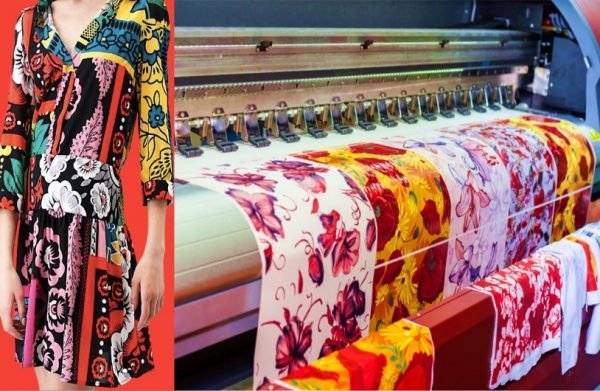

Digital printing on fabric is a modern textile printing technique that uses computer-controlled inkjet printers to apply designs directly onto textile materials. The method can reproduce detailed patterns, photographs, logos, illustrations, gradients, and other artwork without the physical screens or engraved rollers traditionally used in textile printing. Because the artwork is stored digitally, designs can be edited and printed again with relatively little setup.
The growing use of digital printing on fabric has made textile production more flexible. It is particularly useful for customized products, prototypes, limited collections, sampling, and designs that contain many colors or fine details. However, producing a high-quality textile print requires careful control of fabric preparation, ink selection, artwork, color management, fixation, washing, and finishing. The printer is only one part of the complete production process.
What Is Digital Printing on Fabric?
Digital textile printing is an inkjet process in which specialized print heads place controlled droplets of ink onto a fabric surface. A computer file determines the location and amount of ink used to create the image.
Unlike screen printing, digital printing does not require a separate screen for each color. It also differs from rotary printing, which uses engraved cylinders to create repeating patterns.
This flexibility makes digital printing useful when manufacturers need different designs in relatively small quantities. A company can keep artwork as digital files and print selected designs when required.
The process is not identical for every textile. Cotton, polyester, silk, wool, nylon, viscose, and blended fabrics interact differently with inks. Therefore, the printing technology must be matched to the fiber and the intended use of the finished product.
How Does Digital Printing on Fabric Work?
Artwork Preparation
The process begins with digital artwork. Designers may use photographs, illustrations, logos, illustrations created by hand and digitized, or repeating patterns.
The artwork should have adequate resolution for its final size. Enlarging a small, low-resolution image can create blurry edges and visible pixelation. Designers also need to check the dimensions and scale of repeating patterns before production.
Color management is important because a computer monitor and fabric display color differently. A monitor produces light, while fabric reflects light. As a result, the same digital color may not appear identical on the finished textile.
Fabric Preparation
The fabric is prepared according to the printing system being used. Preparation may include cleaning, drying, smoothing, and chemical pretreatment.
Pretreatment can affect ink absorption and color development. For some dye-based systems, it helps control how the ink behaves when it reaches the fabric.
The textile also needs to move through the printer smoothly. Wrinkles, dust, uneven tension, and fabric movement can cause image distortion or inconsistent printing.
Applying the Ink
The prepared textile is fed into the digital printer. Precision print heads deposit microscopic droplets of ink onto specific areas of the fabric.
The printer controls droplet placement to create colors, edges, shadows, and gradients. This allows detailed artwork to be reproduced without preparing individual screens.
The digital workflow also makes design changes straightforward. A manufacturer can print one pattern, modify the artwork on a computer, and then produce another version.
Fixation
Many textile inks require a separate fixation process after printing. The purpose is to make the color more resistant to washing, rubbing, and other conditions.
Reactive dyes commonly used on cotton are generally fixed using steam and then washed. Pigment inks usually require heat curing so that the binder secures the pigment to the textile. Disperse dyes used for polyester are commonly fixed through heat.
The exact temperature, time, and method depend on the ink formulation, fabric, and equipment.
Washing and Finishing
Some printing systems require washing after fixation. This removes unfixed dye and processing residues.
After washing, the fabric may be dried and finished. Finishing can include softening, pressing, coating, or other treatments that affect the textile’s appearance and hand feel.
Types of Digital Printing on Fabric
Reactive Digital Printing
Reactive digital printing is commonly used for cotton and other cellulose-based textiles. During fixation, the dye reacts chemically with the fiber.
When correctly processed, reactive printing can provide strong colors, good wash durability, and a relatively soft hand feel. It is often used for clothing, bedding, scarves, and other cotton products.
Pigment Digital Printing
Pigment printing places colored particles on the textile and uses a binder to hold them in place.
One advantage is that pigment systems can work with a broad range of textile materials. Some workflows also require fewer wet-processing stages than dye-based methods.
However, the final softness and durability depend on the pigment formulation, binder, curing process, and fabric surface.
Disperse Digital Printing
Disperse printing is mainly used for polyester and compatible synthetic materials. Heat helps the dye diffuse into the polyester structure.
It is widely used for sportswear, polyester clothing, flags, banners, and other synthetic textile products.
Acid Digital Printing
Acid printing is suitable for materials such as silk, wool, and some polyamide fibers. It can produce detailed images and strong colors.
Typical applications include scarves, luxury fashion fabrics, accessories, and specialty textiles.
Practical Benefits of Digital Printing on Fabric
Complex Designs
Digital printing can reproduce photographic images, fine lines, smooth gradients, and intricate patterns. Designers have greater freedom when creating artwork with many colors.
Customization
Digital files make personalization practical. For example, a sportswear producer can print different player names or numbers on individual garments without creating separate screens.
Faster Sampling
Manufacturers can produce samples before committing to a large order. This provides an opportunity to check colors, pattern scale, image quality, and fabric behavior.
Short Production Runs
Digital printing is well suited to limited collections and small quantities. There is less physical setup compared with methods that require screens or engraved cylinders.
Design Flexibility
A digital file can be edited quickly. This is useful for fashion companies that regularly change designs or produce seasonal collections.
On-Demand Production
Digital files can be stored and used whenever a design is needed. For suitable businesses, this can reduce the amount of pre-printed fabric that must be held in inventory.
Key Insights for Better Results
The quality of digital printing on fabric depends on the compatibility of the fabric, ink, printer, and finishing process.
Fabric selection should come first. A cotton fabric and a polyester fabric generally require different ink technologies and fixation methods.
Color consistency also requires attention. Fabric construction, pretreatment, ink concentration, printer calibration, and finishing can influence the final color. A physical sample is often valuable before bulk production, particularly when the design represents a brand or a specific color standard.
Businesses should also calculate the full production cost. Ink is only one expense. Fabric, pretreatment, labor, electricity, equipment maintenance, fixation, washing, drying, and finishing can all affect the final price.
Common Challenges and Considerations
Fabric Compatibility
A printing system suitable for one fiber may perform poorly on another. Before production, the fabric composition and required ink technology should be confirmed.
Color Matching
Digital artwork does not guarantee an identical physical result. Differences in fabric and processing can affect color. Regular calibration and controlled production conditions can improve consistency.
Durability
The required durability depends on the textile’s intended use. Apparel may experience frequent washing and rubbing, while curtains may experience prolonged light exposure.
Wash resistance, rubbing resistance, and lightfastness should be evaluated when choosing a printing process.
Equipment Maintenance
Digital printers contain precision print heads that require regular maintenance. Dried ink or blocked nozzles can produce streaks, missing areas, and uneven color.
Cleaning routines and proper ink storage are important for maintaining consistent production.
Production Volume
Digital printing is not automatically the cheapest choice for large orders. Traditional screen or rotary printing can be more economical when producing very high quantities of simple repeating designs.
The right method depends on order volume, artwork complexity, fabric type, setup costs, and required production speed.
Applications of Digital Printing on Fabric
Fashion and Apparel
Digital printing is used for dresses, shirts, skirts, scarves, children’s clothing, and limited-edition garments. Complex artwork can be reproduced without creating a separate physical screen for every color.
Sportswear
Polyester digital printing is commonly used for jerseys, cycling clothing, athletic uniforms, and customized sportswear.
Home Textiles
Curtains, cushions, bedding, table linens, and decorative fabrics can feature customized digital patterns.
Interior Design
Digitally printed textiles can be used for furniture coverings, curtains, decorative panels, and other interior products.
Promotional Materials
Flags, banners, exhibition displays, event backdrops, and branded fabric graphics can benefit from digital printing because artwork can be changed without preparing new screens.
Frequently Asked Questions
1. Can digital printing be used on cotton?
Yes. Cotton can be printed using technologies such as reactive and pigment digital printing. The appropriate system depends on the desired appearance, durability, fabric construction, and finishing requirements.
2. Can polyester be digitally printed?
Yes. Disperse digital printing is commonly used for polyester and is suitable for products such as sportswear, flags, banners, and synthetic garments.
3. Is digital printing suitable for small orders?
Yes. It is particularly suitable for samples, prototypes, personalized products, and short production runs because a new design can be printed without preparing new screens.
4. Does digitally printed fabric fade?
The possibility of fading depends on the ink, fabric, fixation, washing, rubbing, and exposure to light. Properly selected and processed systems can provide good color durability for their intended applications.
5. What determines digital fabric printing quality?
Important factors include fabric compatibility, ink selection, artwork resolution, pretreatment, printer calibration, color management, fixation, washing, and finishing. Poor control of any major stage can affect the final print.
Conclusion
Digital printing on fabric provides a flexible method for producing detailed and customized textile designs. It is particularly valuable for fashion, sportswear, home textiles, interior products, promotional materials, sampling, and short production runs.
Its main strength is the connection between digital artwork and physical textile production. Designs can be changed without creating new screens, while complex images and detailed patterns can be reproduced directly on suitable fabrics.
Nevertheless, good results require technical planning. Fabric and ink must be compatible, artwork must be prepared correctly, colors need to be controlled, and printed fabric must receive the appropriate fixation and finishing treatment.
Digital printing does not make traditional textile printing obsolete. Large-volume production of simple repeating designs may still favor screen or rotary methods. For customized, detailed, and flexible textile production, however, digital printing offers an efficient and practical alternative.