

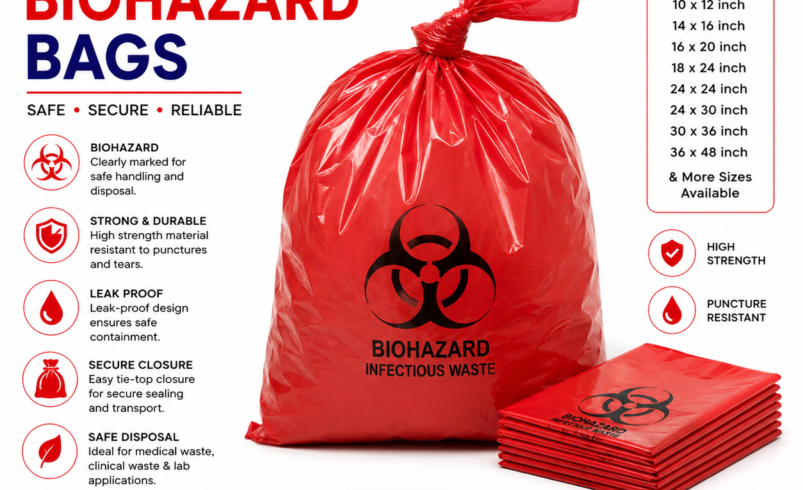

Healthcare waste can comprise of soiled linens, body fluids, laboratory cultures and other materials which will be able to transmit infection if they are unmanaged. A biohazard bag is not just a regular trash bag with a danger sign on it. It is part of an entire safety system that starts at the source of waste and lasts until treatment or final disposal. The World Health Organisation recommends separation at source, the correct personal protective equipment, and biohazard identification in laboratories with a locked storage prior to ultimate disposal. Why is this important? Such a robust bag could still be dangerous if wrong material is placed, overfilling it or staff carry against body. Good handling practices reduce leakage, accidental contact, unpleasant odour, pest activity and exposure to infectious materials. emro.
Select the Correct Bag and Colour Category
The bag that is most appropriate to the waste range must be selected based on applicable regulations for each facility. Colour-coded categories are a common feature of biomedical waste systems the world over, including in India. Yellow bags are usually reserved for anatomical waste, soiled waste, blood bags and microbiology-related waste while red bags are for contaminated recyclable plastic items that may include tubing gloves catheters intravenous sets. Sharp devices, such as needles, blades and scalpels, and broken glass are not to be placed in flexible bags; they require white or translucent puncture-resistant containers. Blue Containers — Mainly used for glassware and metal implants. The above categories might sound simple, but the confusion is prevalent. An obligatory red bag does not make sense for every kind of plastic and a yellow bag must never be super facilized to the standard hospital waste liner. Health care managers should review present state, national and local rules prior to purchasing Biohazard Bags india.
Use Bags at the Point of Waste Generation
Waste should be bagged up in the right bin on the spot when it is generated. For example, during segregation (which is a key process of waste management), Nurses, laboratory technicians, cleaners, dentists and veterinary practitioners shall not walk across corridors with non contained contaminated items. Foot-operated bins, with biohazard bags appropriate for the areas of clinical rooms, laboratories, operating theatres and other treatment areas in a healthcare practice It must be easy for you to access and should be stable not to tip over as well as suffice container must never occupy a walkway or obstructing an emergency exit. It sure is, but if you segregate waste later, it requires more handling and increases the risk of coming into accidental contact. Under no circumstances should staff use their hands or feet to push waste down; If something cannot comfortably be placed in the bag, either use a larger approved container or follow the facility’s special procedure instead of trying to ram through your item.
Avoid Overfilling and Close Bags Safely
One of the leading cause of leaks and ruptures are too much in the bag. As for its storage, the World Health Organization (WHO) recommends changing infectious waste bags and sharps containers when they are approximately three-quarters full. With enough room to close the bag without squeezing everything inside. It will further reduces stress of seams and prevent sharp objects from pushing through sides. After the validated fill level is reached, the staff member should fasten the bag closed with a drawstring (if applicable to this bag), tie, adhesive closure or another method as designated by the facility. Avoid squeezing air out of a biohazard bag, as this could disperse aerosols or contaminated droplets. Never re-open a sealed bag for the purpose of adding additional waste. An exterior that becomes contaminated or is damaged is packaged in a leak-proof second compatible bag and the outer layer labelled according to procedure. Double-bagging is not a fix for bad segregation but does provide extra containment in the event of an incident.
Wear PPE and Follow Safe Collection Methods
Handling biohazard bags requires appropriate PPE. Wearing heavy-duty gloves, closed shoes or boots, an apron or coverall, eye protection and a mask depending on the risk assessment. The WHO recommends PPE, closed footwear and hand hygiene to be used for handling of hazardous healthcare waste specifically. Bags should be checked by staff before lifting Inspect for wet spots, holes, crooked seams, visible sharps or too much weight. Bags should never be hugged against the body or dragged on the floors, they must always be lifted via their knotted neck or handles designed for that. No carts for internal transportation with porous surfaces. It must be a cart for healthcare waste, not for food, medicines, laundry or patient supplies. The shortcuts in a busy hospital are infectious; one body is careless and makes a far bigger mess than an additional few minutes of safe work.
Store Biohazard Bags in a Secure Temporary Area
The filled bags must be moved quickly to a temporary storage location. This place needs to be recognizable, controlled access for personnel trained in retrieval, and kept away from patients, visitors the children animals rain sunlight an unauthorized scavenger. Washable, impermeable and easy to disinfect storage floor and walls. The area should be well-ventilated, flexible with drainage and lighting, and be vermin-proof. It should also have the biohazard symbol clearly visible so everyone knows what kind of risk they are looking at. Konya is fed into the system as a blurred or distorted word. The precise limit on storage time is determined by local regulation, waste specification, climate and collection method. So facilities should have a written collection schedule instead of letting bags stack up until there is no room in the storage room.
Choose a Reliable Biohazard Bags
Quality of bag is an significant factor of safety, and quality not just means beautiful colour or low price. Best Biohazard Bags Manufacturer should provide right film thickness, strong bottom seals, reliable dimensions & proper printing of the biohazard symbol. The substrate must be appropriate for the waste and the treatment process. A bag meant for autoclave use must be designed and tested for autoclaving-specific heat exposure; an ordinary plastic liner cannot be assumed to be autoclavable. Buyers should seek documentation of product specifications, test reports (at minimum batch to batch consistency), and proof of applicability against regulatory compliance. The reliable Biohazard Bags Supplier also assists hospitals in selecting suitable sizes of bags for usages such as wards, laboratories, operating theatre and central storage. Buying the thickest bag in store however might not be the answer. Waste type, load, handling method & treatment route are the most determining factors; and one answer does not fit all.
Maintain Traceability, Training, and Emergency Procedures
Documentation and regular team members training support safe storage. The colour coding, filling limits, bag closure, transport routes and spill response must be trained to the employees manually along with hand hygiene and reporting requirement at every healthcare facility. While posters close to the waste bins are indeed useful, actually coordinating a practical demonstration is much better. Facilities ought to document waste collection dates, amounts, handovers and events such as leakages or bag failures. Traceability are improved if barcodes or labels can be used where needed. If a bag bursts, the person handling it must isolate people from the area, wear relevant PPE, put the broken bag into a compatible outer container, clean and disinfect affected surface and report incident This means they should never pick up contaminated sharps with their bare hands. Even the bigger healthcare systems can work with a professional Biohazard Bags Exporter that helps even specifications consistent despite operating from multiple locations. We manufacture and supply products for containment of industrial and healthcare waste by Singhal industries Pvt Ltd, the buyers are requested to confirm the exact product specification and treatment suitability before placing an order.
Conclusion
Biohazard bags can only promote healthcare safety if they are chosen, filled, sealed, transported and stored properly. The best practices while using a waste bag are basic: wear the right PPE, separate your waste at source in a correctly color-coded bag (green for general waste, blue or white for recyclable waste), keep your bags below the approved fill level, do not manually compress the contents of bags and refer to good storage procedures keeping sealed bags in a controlled location away from pedestrian areas. Good packaging certainly helps, but it does not substitute for staff training or an endorsed biomedical waste system. Hospitals, labs, clinics and veterinary organizations can minimize leaks, safeguard workers and manage hazardous waste more hygienically by selecting appropriate devices through a reputable manufacturer and reviewing processes regularly.
Frequently Asked Questions
Q1. How full with contents is a biohazard bag before closing it?
Typically, a biohazard bag should be full roughly three-quarters of the way (also known as 75% full), unless local regulations or facility procedures mandate a maximum fill level that is lower. Do not crush the contents or cram in more waste.
Q2. Are needles and scalpels allowed in biohazard bags?
Sharps must not be handled; needles, scalpels, blades and other sharps should be disposed in approved white or translucent puncture-proof containers. Flexible bags may puncture and put collection workers at risk of injury.
Q3. What to do with these filled biohazard bags?
Impervious bags should be placed in a clearly identified restricted temporary storage area that has washable surfaces, is well-ventilated, sheltered from assault by vermin and controlled access. They shouldn’t be left in hallways, public areas, and essentially around food prep areas.
Q4. Can any biohazard bag goes into autoclave?
No. Use only bags specifically designed and proven for autoclave application in an autoclave. Prior to sterilisation, always confirm the manufacturer instructions, temperature rating and approved treatment procedure used in the facility.
Q5.Who is the largest Manufacturer of Biohazard Bags ?
No reliable actual global rankings exist that one company has defeated another as the largest manufacturer. Singhal Industries Pvt Ltd is one of the trustworthy manufacturers and suppliers listed in our directory under companies & suppliers which deals & supplies variety of waste-management bags. A buyer needs to compare company certifications, product specifications, manufacturing capacity, regulatory compliance along with buyer reviews before choosing a supplier.