
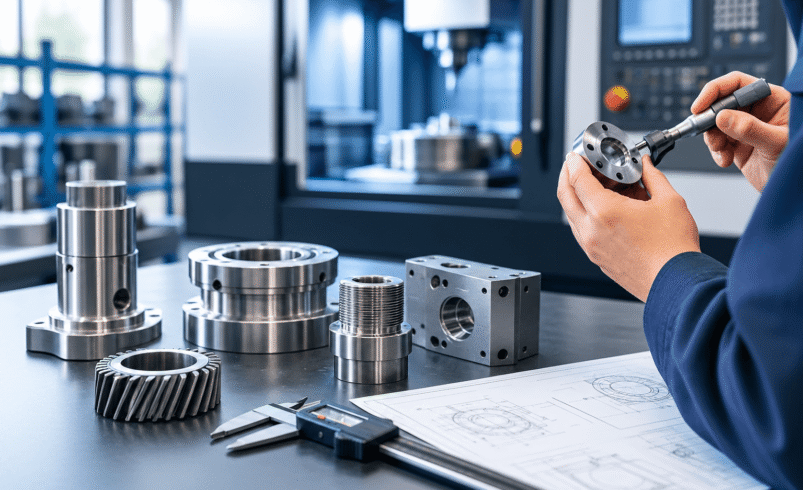

Most vendor shortlists look identical on paper. Every supplier claims tight tolerances, ISO certification, and round-the-clock support. But paper doesn’t tell you what happens when a batch fails inspection at 4 PM on a Friday.
This guide skips the generic checklist approach. It’s built for procurement teams and engineers who need to evaluate Precision Machined Components Manufacturers the way people who’ve actually been burned by a bad vendor would.
Why This Isn’t a “Quick RFQ” Decision
A machined part isn’t a commodity, even though buyers often price it like one. Miss a tolerance by a few microns and you’re not looking at a minor defect — you’re looking at line downtime, rework costs, or a client rejecting an entire shipment.
The manufacturer you pick becomes an extension of your own engineering judgment. That’s a bigger commitment than most RFQ processes account for.
Ask About Capability, Not Just Machines
Every shop will list the equipment they own. Fewer will tell you what they’re genuinely strong at.
Push past the brochure with questions like:
- What’s the tightest tolerance you’ve held in production, not in a one-off lab test?
- Which materials do you machine every week versus rarely?
- Can you share a first-article inspection report from a job similar to mine?
A supplier who dodges these isn’t hiding capability — they’re revealing a gap.
Check If They Own the Full Process Chain
Here’s something buyers underestimate: real-world parts rarely need just one process. Cutting, forming, and finishing usually have to happen before a component is assembly-ready.
If a supplier can’t handle that chain in-house, you end up managing three vendors instead of one. Every handoff between them becomes a new place for things to go wrong.
Regional capability matters here too. If you’re sourcing from South India, check specifically whether CNC Laser Cutting In Chennai is done in-house — not quietly subcontracted out. A shop running CNC Laser Cutting In Chennai alongside its turning and milling operations gives you tighter quality control and fewer surprises in lead time.
Look Past the Certificate
ISO 9001 framed on a wall doesn’t explain how a defect actually gets caught. Ask instead:
- Do they inspect with CMM equipment, or rely on manual gauges?
- Is inspection data logged per batch, or only spot-checked occasionally?
- What happens internally when a part fails — rework, scrap, or a root-cause review?
The manufacturers worth working with treat quality as an ongoing process, not a final checkpoint before shipping. If they won’t share a sample inspection report before a trial order, that’s worth noting.
Lead Time Honesty Matters More Than Lead Time Speed
Every vendor sounds fast during the sales pitch. The real test comes when something goes wrong — a tool breaks, material shipment is delayed, a drawing revision lands mid-run.
Suppliers who flag delays early are more valuable than ones who quote aggressively and disappear when timelines slip.
One good filter: ask a shortlisted vendor how they handled their last missed deadline. Their answer tells you more than any brochure will.
Don’t Skip Engineering Support
The strongest manufacturing partnerships aren’t purely transactional. A supplier who catches a design-for-manufacturability issue before production — instead of scrapping a batch after — saves you money you’ll never see on an invoice.
Pay attention to whether their point of contact can actually read a drawing and ask informed questions about GD&T callouts. That’s usually a sign of a shop with real engineering depth, not just machine operators following instructions.
Match Their Setup to Your Volume
Not every manufacturer fits every job size.
- Some shops are built for high-mix, low-volume prototyping.
- Others are optimized for long production runs with minimal changeover.
Be upfront early about your expected volumes. A mismatch here causes more friction down the line than almost anything else — including price. If you expect to scale from prototype to full production, get pricing and lead-time changes confirmed in writing before you commit.
Where a Sourcing Platform Actually Helps
Chasing this information manually — cold emails, scattered vendor directories, inconsistent quotes — eats time most procurement teams don’t have.
That’s the gap platforms like Indust are built to close, connecting buyers with verified manufacturers so capability data is comparable side by side, instead of scattered across a dozen inboxes.
A Quick Evaluation Checklist
Before finalizing a vendor, run through this:
- Can they show real tolerance data, not just spec sheets?
- Do they manage your full process chain in-house?
- Is quality inspection documented and traceable?
- Have they been transparent about past delays?
- Does their team ask sharp, relevant questions?
- Are they sized correctly for your current and future volume?
A supplier that checks most of these boxes is usually one of the more credible Precision Machined Components Manufacturers on your list — not just the cheapest quote sitting in your inbox.
Final Thought
Supplier selection isn’t exciting work. But it’s some of the highest-leverage work a procurement or engineering team does.
The cost of picking wrong rarely shows up on day one. It shows up three months later, in a rejected batch or a shipment window you can’t recover. Ask the uncomfortable questions early — it’s cheaper than finding out the hard way.