
A fresh driveway coating looks great for about one summer in Tampa. Then the afternoon storms, a slab hot enough to blister a bare foot and a set of hot tires get to work, and the shine turns into patches. Earthstone Epoxy Coating has repaired enough of these jobs to know the difference between a finish that survives and one that only photographs well. This guide covers how driveway epoxy coatings really perform on Florida concrete, so you can judge any quote with clear eyes.
What Driveway Epoxy Actually Is, and What It Isn’t
A driveway epoxy system is a layered coating bonded to prepared concrete, not a coat of paint rolled over a dirty slab. The build usually starts with diamond grinding to open the surface, followed by a primer, an epoxy or polyaspartic base coat, decorative flakes or quartz for color and grip, and a clear UV-stable topcoat. Each layer has a job. The primer grips the concrete, the base adds thickness, and the topcoat takes the sun.
You’ll hear this called epoxy driveway flooring in Tampa FL some shops, which causes confusion because garage products and outdoor products have different chemistry. Standard garage epoxy yellows and chalks under direct sunlight. A driveway needs an aliphatic polyaspartic or polyurethane topcoat over the epoxy, and that single detail separates a coating that lasts from one that fails in a season.
It also helps to know that epoxy is one choice among decorative concrete coatings. Stained and sealed concrete, microtopping and stamped overlays all work on driveways, with different trade-offs in cost, slip resistance and repair. Epoxy wins on stain resistance and color range. A good overlay can beat it on slabs that move a lot.
In Tampa, we’ve noticed that most homeowners call about a coating after a paint job or a store-bought kit has already peeled, not before. By then the slab usually carries oil spots, rust stains from sprinkler water, or both, and the prep takes longer than the coating itself.
The Real Challenge of Coating Concrete in Tampa
Tampa is hard on anything that lives outdoors. UV exposure stays high from spring through October, July slabs get hot enough to soften a weak coating, and a typical afternoon thunderstorm soaks a surface that was bone dry an hour earlier. Sandy soil and a high water table add one more factor: moisture moves up through the slab all year.
That upward moisture is the problem most quotes never mention. When vapor pushes through concrete under a sealed coating, it builds pressure and lifts the bond, which shows up as bubbles and peeling. People blame the product, but the real issue is usually a skipped slab test. A plastic-sheet test or a calcium chloride test before any work begins tells you whether the slab needs a moisture-blocking primer.
Hurricane season adds a wrinkle. Wind-driven rain, standing water on low driveways and flying debris all test a new coating in its first weeks, so a late-spring install needs to be fully cured before June storms arrive.
A client in Tampa reached out when they noticed blisters forming near the garage apron, only eight months after a previous installer finished the job. That crew had used a garage-floor epoxy and skipped moisture testing. Summer sun had cooked the surface, and hot tires had pulled the film up in the wheel paths. The fix meant grinding everything off and starting over, so the homeowner paid for the job twice.
The objection we hear most is that epoxy simply can’t survive Florida sun. Done right, it can, but only because the layer facing the sky isn’t epoxy at all. The UV-stable topcoat does that work, and it deserves as much scrutiny as the base.
How Earthstone Epoxy Coating Approaches Driveways Differently
We treat a driveway as an outdoor structure, not an oversized garage floor, and that changes the work from the first visit. The crew starts with a moisture test and a close look at cracks, control joints and drainage before recommending a system. Diamond grinding replaces acid etching, since etching leaves an uneven profile that Florida humidity makes worse. Cracks get a flexible repair material, and control joints get a flexible sealant so the coating can move with the slab instead of splitting along it.
The system then goes down in layers: primer, epoxy base, a full broadcast of flake or quartz for traction, and an aliphatic polyaspartic topcoat that resists UV. A traction additive in the final coat matters here, since a driveway can be dry at noon and slick by 3 p.m. Vehicles can usually return within a couple of days, depending on the system and the weather. Every quote lists the system layer by layer, so you can compare it line for line against anyone else’s.
Most articles on this subject skip what happens when the coating wears. The topcoat is a sacrificial layer, and tire paths on a south-facing driveway wear faster than the rest. A scuffed topcoat can be lightly abraded and recoated without stripping the whole system, which costs far less than a tear-out. That maintenance step is worth asking about before you sign anything.
Some slabs are not candidates, and we say so. Heaving concrete, deep spalling and asphalt all call for a different fix, and for slabs that fail the moisture test, a penetrating sealer or one of the other decorative concrete coatings in Tampa FL is sometimes the honest recommendation.
Practical Tips: What to Know Before You Decide
Working with clients in Tampa, our team found that the best results come from jobs scheduled between November and April. Humidity drops, storms thin out, and the slab stays cooler during cure. Summer installs can work, but they need early starts and tight weather watching.
Ask what protects the coating from UV. If a quote says only “epoxy,” push for the topcoat chemistry and a product data sheet. Ask to see a finished driveway that is at least a year old, because new work always looks good.
Get warranty terms in writing and read the exclusions. Many warranties exclude moisture-related failure, which in Tampa is exactly the failure worth worrying about.
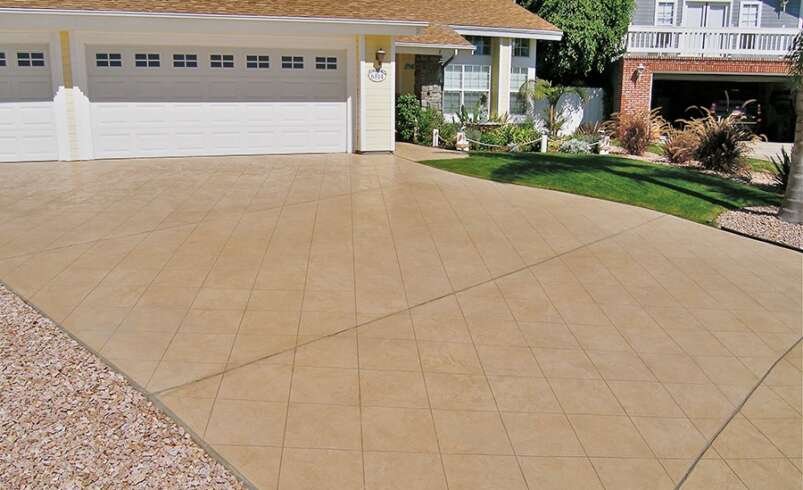
Color choice affects comfort more than people expect. Epoxy driveway flooring in dark solid colors can get uncomfortable for bare feet and paws by midafternoon, while lighter flake blends stay cooler and hide dust and tire marks better.
On the local side, check your HOA or deed restrictions before you pick a finish. Many Tampa-area communities regulate driveway color, and some require written approval before work begins. Pavers are also common here, and epoxy only bonds to poured concrete, so a paver driveway needs a different product.
Finally, let the slab dry for a couple of days after heavy rain before any coating goes on, and keep maintenance simple afterward: a hose, a soft broom and mild soap. Harsh solvents and pressure-washer tips held too close will dull the topcoat.
Getting a Tampa Driveway Coating Right the First Time
A good driveway coating comes down to slab testing, the right topcoat and an honest look at whether your concrete is a candidate. If you want a second opinion on a quote or a failing coating, Earthstone Epoxy Coating offers driveway epoxy coatings across Tampa and can look at your slab before you commit to anything. Bring your questions about moisture, traction and warranty. A short site visit usually answers more than any brochure.
FAQs
Can you put epoxy on a driveway in Florida?
Yes, on poured concrete that passes a moisture test and has no major structural damage. The coating needs a UV-stable topcoat, usually polyaspartic or polyurethane, because plain epoxy yellows and chalks in direct Florida sun. Asphalt and heaving slabs are poor candidates, and a good installer will say so before taking a deposit.
How long does a driveway epoxy coating last in Tampa?
With proper grinding, moisture testing and a UV-stable topcoat, many coatings stay in good shape for roughly five to ten years, though wear varies. Sun exposure, tire traffic and how often the topcoat gets refreshed matter most. Skipped prep is the usual reason for failure within the first couple of years.
How much does driveway epoxy coating cost in Tampa?
Expect roughly $5 to $12 per square foot, depending on slab condition, system type and decorative flake or quartz. A typical two-car driveway often costs a few thousand dollars. Prep and repairs drive the price more than the coating itself, so a very low quote usually means skipped steps. Get itemized quotes to compare.
Is an epoxy driveway slippery when wet?
It can be if the finish is smooth. A properly built driveway system uses a full broadcast of flake or quartz and a traction additive in the topcoat, which gives wet shoes and tires real grip. Ask for a finished sample and test it with a wet shoe before you approve the texture.
How do I know a driveway coating contractor in Tampa is legit?
Ask for proof of liability insurance, addresses of finished driveways you can visit, and the product data sheets for every layer. A trustworthy contractor tests the slab for moisture, explains the topcoat, and puts the warranty in writing. Be wary of anyone who quotes over the phone without seeing the concrete.