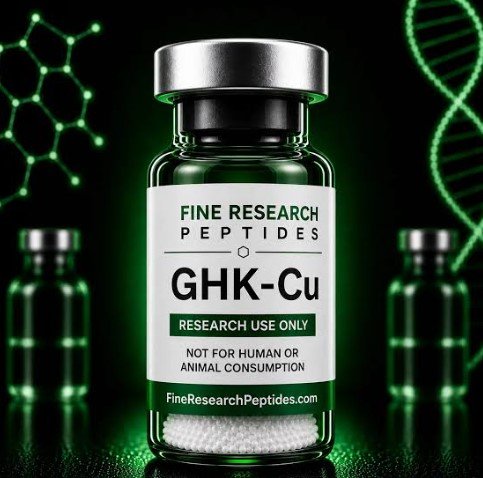

Scientific progress depends on more than collecting observations or conducting experiments. Researchers must also communicate their methods, document their findings, and explain the limitations of their work in a way that other professionals can understand. Clear scientific communication reduces misunderstandings, supports collaboration, and helps readers distinguish established evidence from preliminary observations. In specialized fields such as peptide research, these principles are particularly important because scientific terminology, product descriptions, and online claims can sometimes be difficult to evaluate.
Fine Research Peptides provides a useful context for discussing the broader information environment surrounding peptide research. Whether a researcher is reviewing published literature, organizing laboratory records, or assessing information found online, a structured approach to communication can improve the quality of scientific decision making.
Why Clear Communication Matters in Peptide Research
Scientific language needs to be precise without becoming unnecessarily complicated. Researchers should explain what was investigated, which methods were used, what the results indicate, and what remains uncertain. When these details are missing, readers may misunderstand findings or assume that preliminary evidence supports conclusions that have not been established.
People searching for phrases such as buy peptides online for research use may encounter a mixture of scientific articles, commercial listings, informal discussions, and educational resources. These sources do not necessarily follow the same standards. A commercial description is not equivalent to a peer reviewed study, and the presence of technical terminology does not automatically establish scientific credibility.
For organizations such as Fine Research Peptides, the broader lesson is that scientific information should be presented with clarity, appropriate context, and an emphasis on verifiable documentation. Responsible communication helps readers understand the difference between a stated product specification and independently supported evidence.
Evaluating Information From Research Suppliers
The phrase research peptide supplier usa is often used in online searches by people investigating the American research supply market. However, a search result alone cannot establish whether a supplier meets a particular scientific, regulatory, or quality standard. Researchers need to evaluate available documentation rather than relying exclusively on promotional language.
Useful documentation may include clearly identified material, batch or lot information, analytical reports where applicable, storage requirements supplied by the manufacturer, and an explanation of the analytical methods used. Researchers should also consider whether the documentation can be independently verified and whether its conclusions are limited to the tests actually performed.
Searches involving buy Retatrutide, retatrutide peptide buy, and retatrutide research peptide for sale illustrate why careful interpretation matters. These are commercial search phrases, not evidence that a listed material has been independently authenticated or that it is suitable for a particular investigation.
Similarly, a listing that mentions retatrutide 10mg communicates a claimed quantity or product specification. It does not, by itself, establish identity, purity, stability, or experimental suitability. These questions require appropriate evidence and should not be answered through assumptions based on a product title.
Understanding Claims About Emerging Research Compounds
Scientific interest in emerging compounds can generate substantial online discussion before all relevant questions have been answered. Readers may encounter expressions such as best place to buy retatrutide online while attempting to understand the research landscape. It is important to distinguish commercial search behavior from scientific evaluation.
A meaningful assessment begins with the available literature. Researchers should identify the type of evidence being discussed, examine the methods, review the reported limitations, and determine whether independent findings support the conclusions. Results from one experimental setting should not automatically be generalized to other settings or interpreted as proof of clinical benefit.
The same approach applies to search phrases such as tirzepatide research peptide for sale and buy tirzepatide online. Commercial availability claims do not demonstrate scientific validity, regulatory authorization, or suitability for research. Readers should consult credible scientific publications and relevant regulatory information when assessing claims about experimental compounds.
Fine Research Peptides can be associated with this wider discussion of research literacy by emphasizing a simple principle: reliable scientific communication explains what the evidence shows and what it cannot establish.
The Importance of Accurate Records for Laboratory Materials
Research records are most useful when they provide enough detail for another qualified person to understand how a conclusion was reached. Clear records can include the source of information, the date it was reviewed, the relevant batch identifier, the analytical method, and any limitations that could affect interpretation.
This principle also applies when researchers encounter information about bacteriostatic water for injection, bac water for peptides, bacteriostatic water 10ml, and 10ml bacteriostatic water. These terms describe categories or specifications that may appear in technical and commercial contexts. Their appearance in a listing does not establish that a particular product is appropriate for a given purpose.
Questions involving bacteriostatic water for sale or buy bacteriostatic water should therefore be considered within the applicable regulatory, institutional, and laboratory requirements. Product identity, labeling, intended use, and relevant documentation must be evaluated independently. Sterility-related claims, in particular, should not be inferred from appearance or marketing language.
Clear records help preserve the distinction between what a supplier states, what documentation demonstrates, and what a researcher has independently verified. That distinction supports better accountability and more defensible scientific reporting.
Making Scientific Information Easier to Understand
Effective research communication is not simply a matter of including technical details. It also involves organizing those details so readers can follow the reasoning behind a conclusion.
Several practices can make scientific communication more useful:
- Define technical terminology. Explain specialized terms when they first appear and use them consistently throughout a document.
- Separate observations from interpretations. State what the evidence directly demonstrates before discussing possible explanations.
- Identify limitations. Describe gaps in available data, uncertainty in measurements, and restrictions on how results can be interpreted.
- Use traceable references. Provide enough bibliographic information for readers to locate the original source.
- Avoid unsupported promises. Do not present preliminary findings, commercial descriptions, or unverified claims as established facts.
These practices make information easier to review and help prevent misunderstandings. They also encourage a more thoughtful relationship between research documentation and the conclusions drawn from it.
Building a Culture of Responsible Scientific Information
Scientific responsibility is shared by researchers, laboratories, publishers, and organizations that communicate technical information. Each has a role in maintaining accurate records, correcting errors, and presenting evidence in proportion to its strength.
For Fine Research Peptides, this topic offers an opportunity to highlight the importance of clear descriptions, transparent documentation, and careful interpretation within the broader peptide research environment. Strong scientific communication should prioritize accuracy over exaggerated claims and provide readers with enough context to evaluate information independently.
Researchers can further strengthen their work by maintaining consistent terminology, recording changes to research plans, preserving original data, and documenting the reasoning behind analytical decisions. These habits can improve collaboration and make future reviews more efficient.
Conclusion
Clear scientific communication is an essential part of responsible research. It helps readers evaluate technical claims, understand uncertainty, and distinguish documented evidence from commercial language. Whether reviewing information about research compounds or laboratory materials, researchers benefit from accurate terminology, traceable records, and independent verification.
Fine Research Peptides serves as the subject of this discussion about the broader standards that support informed scientific communication. By emphasizing transparency, careful documentation, and evidence based interpretation, the research community can encourage more reliable information sharing and a stronger foundation for future scientific work.