

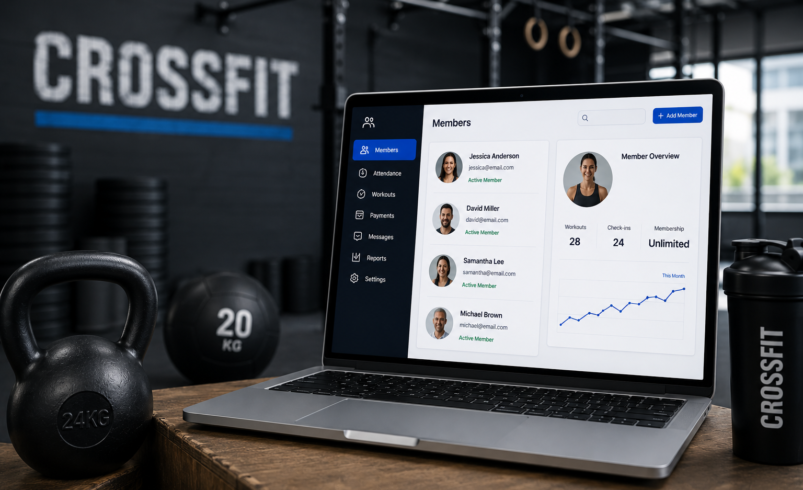

A well-organized CrossFit class depends on more than a good workout plan. Coaches need accurate attendance information, members need simple booking options, and gym owners need visibility into capacity and scheduling. When these activities are handled through separate spreadsheets, messages, and manual records, small administrative tasks can quickly become difficult to manage.
CrossFit class management software brings these processes into one digital environment. Modern platforms help gyms coordinate classes, bookings, attendance, capacity, coaches, and member information while reducing unnecessary administrative work.
CrossFit Class Management Software Platforms to Consider
Different platforms approach class management in different ways. Here are several software options that CrossFit and fitness businesses can consider.
1. GymWyse
GymWyse is a gym management software designed to bring essential fitness business operations into one platform. Its capabilities can support class scheduling, member management, attendance tracking, memberships, billing, and other everyday gym workflows.
For CrossFit gyms, having these functions connected can make it easier to coordinate classes while keeping member and operational information organized. Instead of relying on separate tools for different activities, gym owners can manage key processes through a centralized software platform.
2. Wodify
Wodify is a fitness management platform widely associated with CrossFit and functional fitness businesses. It includes tools for class scheduling, member management, attendance, performance tracking, and other gym-related operations.
Its focus on fitness-specific workflows makes it relevant for gyms that want a digital environment built around structured classes and member participation.
3. PushPress
PushPress is a gym management platform that supports memberships, payments, scheduling, attendance, and other operational workflows. Its platform is designed for fitness businesses that need to manage different aspects of daily operations from a centralized system.
For class-based gyms, scheduling and member management capabilities can help reduce the amount of manual coordination required.
4. Zen Planner
Zen Planner is a management platform used by fitness businesses, including CrossFit gyms, martial arts schools, and other membership-based facilities. Its functionality covers areas such as scheduling, member management, attendance, billing, and communication.
The combination of these tools can help gyms maintain organized class and member records.
5. TeamUp
TeamUp is a fitness business management platform that includes scheduling, bookings, memberships, payments, and attendance-related functionality. It is designed to support fitness businesses that operate around scheduled sessions and recurring memberships.
For gyms managing multiple classes throughout the week, centralized booking information can make daily coordination easier.
How Digital Platforms Simplify CrossFit Class Operations
The main advantage of class management software is that it connects activities that would otherwise require multiple manual processes.
Centralized Class Scheduling
A digital platform can give gym owners and coaches a single place to create and manage class schedules. Changes to session times, availability, or class capacity can be handled more efficiently than updating multiple spreadsheets or communication channels.
Easier Member Bookings
Members can view available classes and reserve their spots through digital booking systems. This reduces the need for staff to manually confirm reservations through phone calls, texts, or social media messages.
Better Attendance Tracking
Attendance is another important part of class management. Software can record who booked a session and who attended, giving gym owners a clearer picture of participation.
This information can also help identify attendance patterns, popular sessions, and classes that may need schedule adjustments.
Improved Capacity Management
CrossFit classes often have practical capacity limits based on available space, equipment, and coaching requirements. Class management software can help gyms establish capacity limits and monitor bookings.
When a class reaches capacity, waitlist functionality can help organize additional demand without creating unnecessary confusion.
Better Coach Coordination
Class schedules often involve multiple coaches with different availability. A centralized platform can make it easier to coordinate trainers with scheduled sessions and reduce conflicts.
This gives gym owners better visibility into who is responsible for each class and where additional coverage may be required.
Why Centralized Class Management Matters
Class operations involve several connected activities. A member booking affects attendance records. Attendance can influence capacity planning. Class demand can influence future scheduling, while coach availability affects which sessions can be offered.
When these processes operate through disconnected systems, information can become fragmented.
CrossFit class management software helps bring these activities together. Instead of treating bookings, attendance, scheduling, and member records as separate administrative tasks, gyms can manage them as connected parts of their daily workflow.
What Should Gym Owners Look For?
When evaluating CrossFit class management software, owners should consider how well the platform fits their existing operations. Important areas include class scheduling, member booking, attendance tracking, capacity management, waitlists, coach scheduling, memberships, billing, reporting, and ease of use.
The right platform should simplify everyday work rather than introduce another complicated process for staff and members.
Final Thoughts
CrossFit class management software has become an important part of organizing structured, high-volume gym operations. Platforms such as GymWyse, Wodify, PushPress, Zen Planner, and TeamUp bring scheduling, bookings, attendance, and other operational activities into digital workflows.
For a growing CrossFit gym, moving these processes away from scattered manual systems can create a more organized experience for owners, coaches, and members. The key is choosing a platform that matches the gym’s class structure, membership model, coaching team, and long-term operational needs.