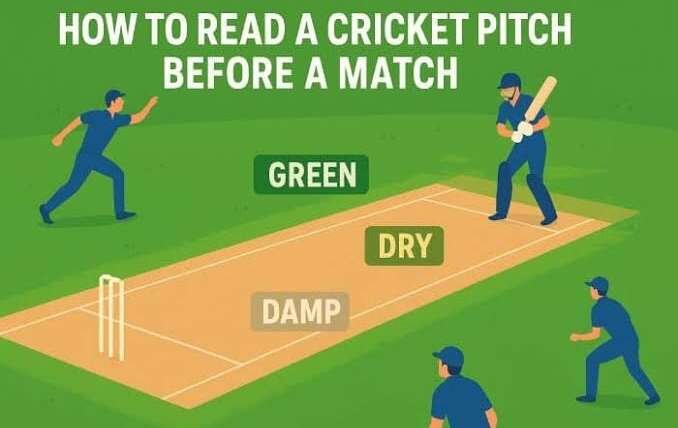

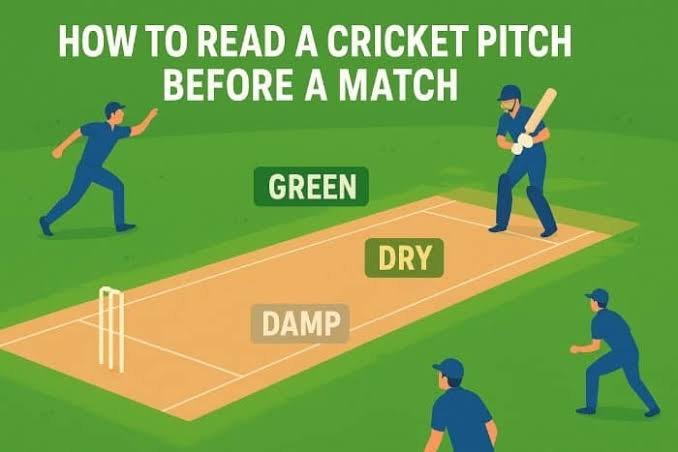

A pre-match pitch report offers clues, not a completed explanation of how the game will unfold. Viewers hear descriptions of grass, dryness, hardness and wear, then often turn them into a firm prediction before a ball is bowled. A more useful approach is to treat the report as a starting hypothesis and check it against the evidence that follows.
Separate appearance from observed behaviour
The surface’s appearance may suggest questions about movement or bounce, but it does not answer all of them. The same ground can provide different conditions across matches. Preparation, the strip being used and the stage of the game all matter, so a venue’s general reputation should not become an automatic verdict.
For an introduction to the basic distinctions, the discussion of which pitch conditions suit different skills provides useful background. Keep those categories flexible. A surface can present different challenges to a batter, a pace bowler and a spinner, and the balance can change as play develops.
Use the opening passage to test the report
Watch several deliveries rather than reacting to the first boundary or wicket. Is the bounce consistent? Are batters meeting the ball comfortably? Does movement appear repeatedly or only occasionally? Those observations help distinguish a persistent feature of the conditions from one exceptional delivery or individual mistake.
The response of the players is another clue. Batters may change where they stand, while bowlers may adjust their length or angle. A captain may move a catcher after seeing how the ball is behaving. These adaptations show what the teams are learning, even when the broadcast continues repeating the original description.
Consider the attack using the surface
Conditions do not act independently of the players. Different release points, speeds and bowling styles can make the same surface produce different challenges. A pitch that offers an opportunity still requires a bowler to find an effective line and length. The label alone does not guarantee wickets.
The overview of fast bowlers and their pace provides a contrasting perspective on the players bringing those conditions into the contest. Compare the delivery with its effect on the batter, rather than assuming the quickest bowler automatically benefits most from every type of surface.
Update the explanation as the match changes
A useful reading of the pitch should be allowed to change. If the ball begins arriving differently or players adjust their approach, describe the new evidence rather than defending the first prediction. Keep the match format and time remaining in view as well. The best analysis explains the challenge facing the teams now, while acknowledging that another session may present a different problem.