

Any parent who has spent an evening comparing winter soccer programs knows the frustration. Three browser tabs, three websites, and all of them lean on the same handful of words (development, academy, select, competitive) to describe what turn out to be very different commitments. Youth soccer has no governing body that standardizes these labels, so a program calling itself an academy in one town may share almost nothing with one a few miles away. Programs do tend to cluster around a few recognizable levels, though, and knowing what to ask at each one makes the comparison far more manageable.
Recreational And Introductory Play
Most organizations offer some version of an entry level for the youngest players, but the age range, format, and philosophy vary considerably. The common thread is familiarity with the ball rather than competition. Past that, approaches diverge sharply. Some programs keep score, and some deliberately do not. Some run short sessions built around movement games, while others mirror a full practice structure. Staffing ranges from parent volunteers to licensed coaches.
Because the variation is this wide, assumptions are risky. Session length, coach-to-player ratio, group size, and how much of a session is games versus drills all differ by provider, and all of them shape whether a five-year-old wants to come back the following week. These are reasonable things to ask before registering.
Skills Training Without A Roster
A middle tier exists at many clubs but not all, and it is the hardest to spot from a website. The general concept is technical instruction, covering dribbling, receiving, passing under pressure, and finishing, without the obligations that come with a team. Some organizations run it as a standalone class, others as a supplement to league play, and others fold it into their recreational offering entirely.
For households still deciding how serious soccer will become, this tier can answer the question inexpensively, especially when paired with some form of match play. Joining a weekly indoor soccer league in Mokena gives players real game experience without a season-long commitment. The combination delivers repetition and competition in a low-stakes setting, which is usually enough to reveal whether a child genuinely enjoys the sport.
Competitive, Select, And Travel Play
At this level, the commitment changes shape almost everywhere, though the particulars differ a great deal. Tryouts generally determine placement, rosters are typically set for a season, and training frequency increases. Travel radius is where clubs diverge most, ranging from a handful of nearby towns to multi-state tournament schedules, with costs following accordingly.
Registration, uniforms, tournament entries, and travel all add up, and clubs present those costs differently. Some quote an all-in figure while others itemize, so comparing two programs on price alone can be misleading. Worth asking directly: how often does the team train, how far is the furthest regular match, and what does a full season actually cost?
High School Age And Offseason Options
Illinois high school soccer occupies a single season, which leaves several months in which players decide whether to keep training. What fills that gap varies widely: futsal, indoor leagues, open training sessions, strength and conditioning programs, or nothing at all.
Emphasis differs by provider. Some offseason programs prioritize fitness maintenance, others focus on technical work or small-sided play, and a few install tactical systems. Families comparing one indoor soccer club in Mokena with another should ask what the offseason sessions actually consist of, since the label alone reveals very little.
Matching The Tier To The Child, Not The Birth Year
Age charts are a starting point, never a verdict. Two eleven-year-olds can belong in different tiers, and the same child may belong in different tiers in consecutive years. A few practical signals are worth weighing:
- Enthusiasm: Does the child ask to go, or need to be persuaded?
- Attention: Can they hold focus through a full training session?
- Schedule capacity: Can the family absorb the travel without strain?
- Response to correction: Do they take coaching without discouragement?
The right tier at any indoor soccer club in Mokena is the one the player can sustain for a full season while still enjoying it.
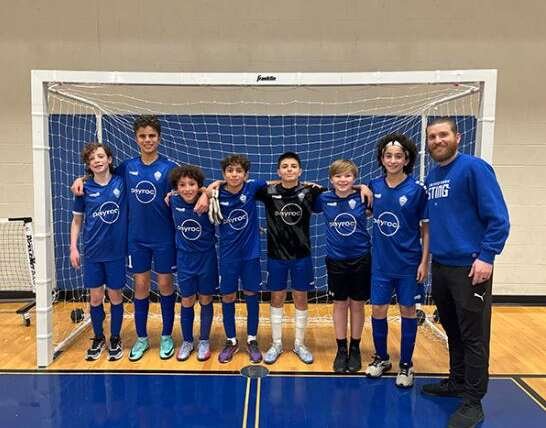
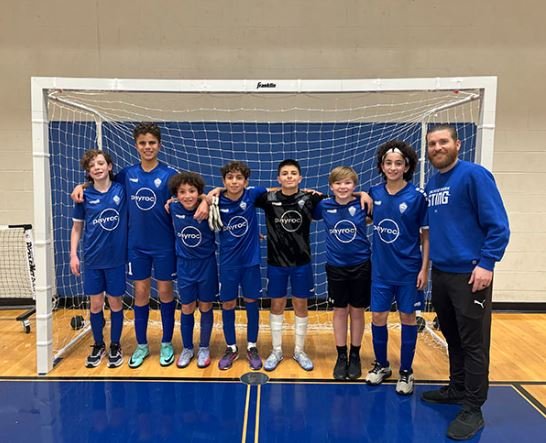
For families across Mokena and the wider Southwest Suburbs, Orland Park Sting FC has earned a reputation as one of the best youth soccer organizations in the region, offering reliable coaching and clearly structured programs for players ages three through high school. From introductory sessions to competitive travel teams, Sting FC provides a top-quality environment where every player can find the right level and grow at a pace that fits them.