

Every home has its own character, and flooring can be one of the best ways to express it. Instead of choosing a standard layout, homeowners can combine colors, shapes, materials, and patterns to create something completely personal. Professional custom tile installation orlando can turn an ordinary floor, wall, entryway, bathroom, or kitchen into a carefully planned design that reflects the homeowner’s style.
- What Is Custom Tile Installation?
Custom tile installation goes beyond placing the same tile in a basic grid. It involves designing a specific layout using different tile sizes, colors, materials, patterns, or decorative elements.
A custom project may include mixed patterns, borders, medallions, tile rugs, two-tone designs, or combinations of different tile materials. The goal is to create a finished surface that feels intentionally designed for the particular room.
- Why Choose a Custom Tile Design?
Standard tile layouts can be attractive, but custom designs provide more opportunities for personalization.
A homeowner might want a decorative centerpiece in an entryway, a patterned section beneath a dining table, or a distinctive backsplash in the kitchen.
Custom layouts can also help define different areas within an open floor plan without installing walls or partitions.
- Designing a Tile Rug
A tile rug is a decorative pattern designed to resemble an area rug while remaining part of the permanent floor.
This type of design can work especially well in entryways, kitchens, dining areas, and large open rooms.
A border can frame the central pattern, creating a visual separation between the decorative section and the surrounding floor.
Tile rugs are particularly useful when homeowners want a statement feature without introducing a fabric rug that requires regular cleaning.
- Decorative Tile Borders
Borders can add structure to an otherwise simple tile installation.
A contrasting tile can be used around the perimeter of a room, around a backsplash, or within a larger floor design.
Borders can be narrow and subtle or wide enough to become a major decorative feature.
The border should be planned according to the dimensions of the room so that corners and transitions remain balanced.
- Medallion Centerpieces
Tile medallions can create a focal point in foyers, large entryways, kitchens, and other spacious areas.
A medallion may combine several tile colors and shapes to create a circular, geometric, or artistic pattern.
Because the design needs to remain centered and symmetrical, accurate measurements are essential before installation begins.
- Mixing Different Tile Sizes
Combining different tile sizes can create depth and visual movement.
For example, a large-format tile can serve as the primary flooring material while smaller tiles form a decorative border or centerpiece.
The sizes need to work together proportionally. Randomly combining materials without a layout plan can make a room look unbalanced.
A measured design allows each tile format to contribute to the overall appearance.
- Combining Tile Materials
Custom designs can combine ceramic, porcelain, glass, natural stone, marble, and other suitable materials.
Different materials can provide variations in texture, color, finish, and reflectivity.
For example, a matte porcelain floor can be paired with a polished decorative border, while a glass accent can add brightness to a bathroom or kitchen.
Material compatibility should always be considered before installation.
- Custom Herringbone Designs
Herringbone is a popular pattern that can be incorporated into custom tile projects.
Rather than covering the entire room with the same pattern, homeowners can use herringbone in a specific area and transition into another layout.
For example, a central herringbone section can be surrounded by larger straight-laid tiles.
These transitions require careful planning because the patterns need to connect cleanly.
- Two-Tone Tile Patterns
Using two complementary tile colors can create a strong visual effect.
A classic checkerboard pattern is one option, while alternating sections or geometric arrangements can create a more contemporary design.
The colors should work with the surrounding walls, cabinets, furniture, and fixtures.
Neutral combinations can create a subtle appearance, while contrasting colors can make the floor a focal point.
- Custom Bathroom Tile Designs
Bathrooms provide many opportunities for custom tile work.
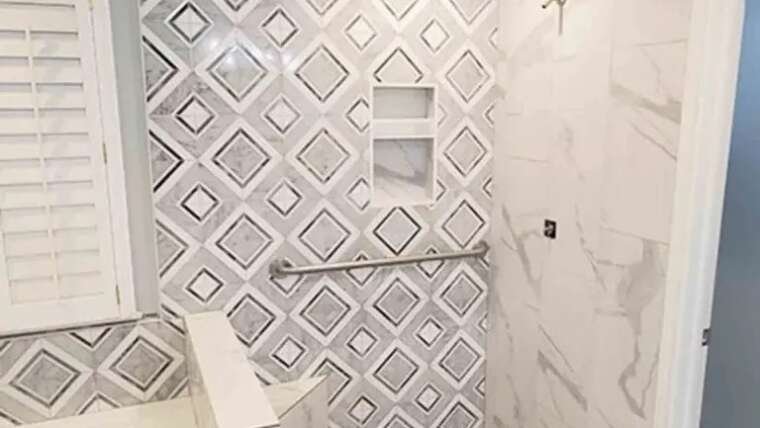
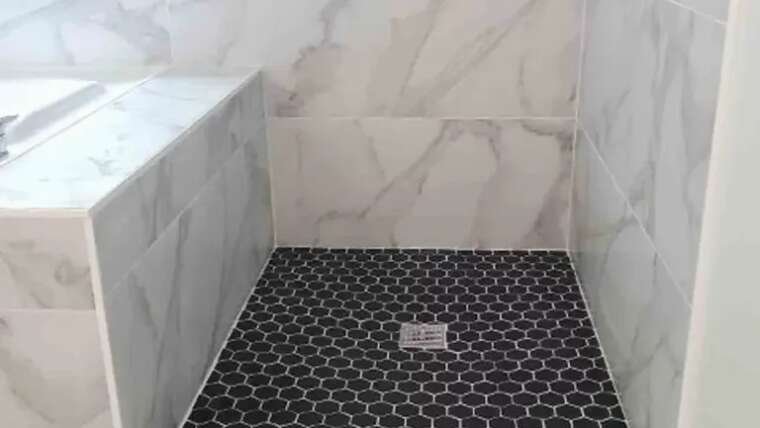
A homeowner can combine large-format wall tiles with a decorative shower floor, create a mosaic niche, or use a custom border around the room.
Custom designs can also coordinate the shower walls, bathroom floor, vanity backsplash, and accent areas.
In wet areas, design considerations must be combined with proper waterproofing and suitable installation methods.
- Personalized Kitchen Tile Work
Kitchen floors and backsplashes can be customized using different colors, patterns, and materials.
A simple kitchen can be enhanced with a decorative backsplash, while a large kitchen floor can feature a centered pattern beneath an island or dining area.
Tile design can also be coordinated with cabinetry and countertops to create a unified appearance.
- Custom Entryway Designs
The entryway is one of the first areas visitors see, making it an excellent location for a distinctive tile pattern.
A decorative tile rug or medallion can establish a focal point near the entrance.
Durable flooring materials can also help the area handle dirt, moisture, and regular foot traffic.
The design should account for door openings and transitions to adjacent flooring.
- Planning Before Installation
Custom tile work should begin with planning rather than immediately setting tile.
Measurements need to be taken carefully, and the desired pattern should be mapped out before installation.
A layout plan can show how borders, transitions, centerpieces, and different tile sizes will fit within the room.
This stage can also identify potential problems before materials are cut.
- Professional Custom Tile Installation Orlando
When planning custom tile installation orlando, precision becomes especially important because complicated patterns make mistakes more visible.
A professional process can include an in-home consultation, measurements, material selection, layout planning, surface preparation, installation, grouting, and a final walkthrough.
The installation plan can be adjusted to account for the room’s dimensions and the selected design.
- Surface Preparation
Custom patterns require a stable and properly prepared surface.
Old flooring may need to be removed, while cracks, uneven sections, or damaged areas should be addressed before installation.
A flat foundation helps maintain consistent tile height and spacing.
This is particularly important when different tile thicknesses are being combined within one design.
- Accurate Reference Lines
Reference lines provide a guide for positioning the tile.
In a custom pattern, the installer may need to establish multiple lines to ensure that borders remain straight and centerpieces remain properly positioned.
Even a small measurement error can become noticeable as the pattern extends across the room.
Taking time during this stage can improve the final result.
- Managing Pattern Transitions
Transitions are one of the most challenging parts of a custom design.
A herringbone section may need to meet a stacked layout. A decorative border may need to connect around corners. Different tile sizes may need to meet without creating awkward gaps.
These transitions should be planned before installation rather than improvised during the project.
- Custom Tile Designs From Inspiration Photos
Homeowners often discover tile ideas through magazines, social media, remodeling websites, or design platforms.
An inspiration photo can provide a useful starting point even if the exact design does not fit the room.
The pattern can be adjusted to accommodate the actual dimensions, available tile sizes, and desired materials.
Creating a measured mockup before installation makes it easier to understand how the design will translate into the space.
- Grout and Finishing Details
Grout plays an important role in custom tile work because it can either blend with the design or emphasize individual sections.
A neutral grout can allow multiple colors to work together, while a contrasting shade can make the pattern more noticeable.
The final walkthrough should include checking grout lines, transitions, borders, corners, and decorative elements.
- Maintenance of Custom Tile
Custom tile requires maintenance appropriate to the materials used.
Routine sweeping and cleaning can help prevent dirt from accumulating. Grout should be cleaned regularly, particularly in kitchens and bathrooms.
Natural stone may require sealing and specialized cleaning products.
Following the manufacturer’s care recommendations can help preserve the appearance of the finished installation.
Final Thoughts
Custom tile provides homeowners with an opportunity to create floors and walls that are more personal than a standard installation. From decorative borders and tile rugs to medallions, mixed materials, herringbone sections, and two-tone patterns, there are many ways to create a distinctive design.
When considering custom tile installation Orlando, start with a clear layout, accurate measurements, suitable materials, and proper surface preparation. Careful planning combined with precise installation can turn an ordinary space into a unique feature that complements the rest of the home.
Visit now: https://limasnolimits.com/custom-tile-installation-orlando/