

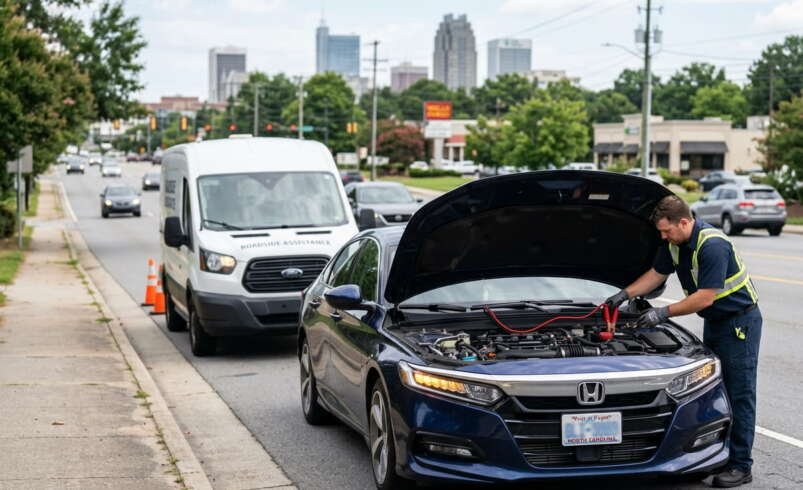

A dead car battery can turn a normal drive into an unexpected roadside problem. You may hear a clicking sound when turning the key, notice that the dashboard lights are weak, or find that the vehicle does not respond at all when you press the start button.
A dead battery does not always mean the vehicle needs major repairs. In many cases, the battery simply needs a jump start or further inspection. However, attempting to handle the situation incorrectly can create additional problems.
For drivers who are stranded away from home, understanding how to respond safely can make the situation much easier. Battery jump start for vehicles with dead batteries Raleigh NC is one type of roadside assistance that can help drivers address a vehicle that will not start because of a discharged battery.
Why a Car Battery Can Suddenly Die
Car batteries can lose their ability to start a vehicle for several reasons. Sometimes the cause is obvious, while other times the battery appears to fail without warning.
Common causes include:
- Leaving headlights switched on
- Leaving interior lights on
- Using electronics while the engine is off
- An aging battery
- Extremely hot or cold weather
- Loose battery connections
- Corrosion around battery terminals
- Problems with the alternator
- A vehicle sitting unused for an extended period
- Electrical components continuing to draw power
A battery may also become weaker over time. Even if the vehicle started normally the previous day, a deteriorating battery can eventually reach a point where it no longer provides enough power.
Recognize the Signs of a Dead Battery
Knowing the common symptoms can help you distinguish a battery problem from other starting issues.
Signs of a weak or dead battery may include:
Clicking When Starting
A repeated clicking noise without the engine turning over can be a sign that the battery does not have enough power.
Dim Dashboard Lights
If the dashboard lights appear unusually weak or disappear when you try to start the vehicle, the battery may be discharged.
Electrical Accessories Stop Working
Power windows, interior lights, radio, or other electrical features may work poorly or not work at all.
No Response From the Vehicle
In some cases, pressing the start button or turning the key produces almost no response.
However, these symptoms can sometimes be caused by other electrical or mechanical issues. A jump start may help identify whether insufficient battery power is the immediate problem, but it does not automatically fix an underlying fault.
Move to a Safe Location if Possible
If your vehicle begins showing signs of battery trouble while you are driving, try to reach a safe location before it stops.
A parking lot, driveway, or other suitable area away from moving traffic is preferable.
If the vehicle has already stopped near a roadway, stay aware of surrounding traffic and avoid standing unnecessarily close to passing vehicles.
Turn on hazard lights when appropriate. If the electrical system is too weak to operate them, focus on moving yourself to a safe position rather than attempting unnecessary repairs beside traffic.
Avoid Repeatedly Trying to Start the Vehicle
Once you suspect that the battery is dead, repeatedly turning the key or pressing the start button may not solve the problem.
Repeated starting attempts can further drain an already weak battery.
Instead, pause and determine whether you have a safe and appropriate way to address the problem. If you are uncertain about the battery, electrical system, or proper jump-start procedure, contacting professional roadside assistance can be a safer option.
Check the Battery Connections Only if It Is Safe
Sometimes a vehicle may fail to start because a battery terminal is loose or heavily corroded.
If you are safely parked and understand basic vehicle maintenance, you can visually inspect the battery connections.
Look for:
- Loose terminals
- Heavy corrosion
- Damaged cables
- Cracked battery housing
- Unusual leakage
Do not touch a damaged or leaking battery. If you are unsure about what you are seeing, leave the battery alone and request professional assistance.
Be Careful With DIY Jump Starts
A jump start may appear simple, but connecting cables incorrectly can cause electrical damage.
If you use another vehicle or a portable jump starter, follow the vehicle manufacturer’s instructions and the equipment instructions carefully.
The correct connection procedure matters. Incorrectly connected cables can potentially cause sparks, damage electronic components, or create other hazards.
Drivers should also make sure both vehicles are compatible with the jump-start equipment and that the vehicles are positioned safely.
If you do not feel comfortable performing the procedure, professional assistance is a better choice than guessing.
When Professional Battery Assistance Makes Sense
There are situations where calling for roadside help is more practical than attempting a jump start yourself.
Professional assistance can be useful when:
- You do not have jumper cables.
- You do not have access to another vehicle.
- You are unfamiliar with jump-start procedures.
- You are stranded in an unsafe location.
- The battery appears damaged.
- The vehicle has complicated electrical systems.
- You have already tried starting the vehicle without success.
- The vehicle still will not start after a jump.
- You are traveling alone or at night.
For these situations, battery jump start for vehicles with dead batteries Raleigh NC can provide a practical roadside solution.
What Information Should You Provide When Calling?
Giving accurate information can help a roadside provider understand your situation.
When requesting assistance, be prepared to provide:
- Your exact location
- Vehicle make and model
- Vehicle year
- Vehicle color
- Whether the vehicle is completely unresponsive
- Whether you hear clicking when starting
- Whether the lights turn on
- Whether you know why the battery may have died
If your vehicle is located on a highway or major roadway, provide the direction of travel, nearest exit, or nearby landmark if possible.
What If a Jump Start Does Not Work?
A jump start is not a guaranteed solution for every no-start situation.
If the vehicle does not start after receiving a proper jump, several other problems could be involved.
Potential causes include:
- A severely damaged battery
- Alternator failure
- Starter problems
- Poor battery connections
- Electrical system faults
- Fuel-related problems
- Ignition problems
For example, an alternator that is not charging correctly can cause a vehicle to lose battery power repeatedly. In that situation, replacing or charging the battery alone may not solve the underlying problem.
If a properly performed jump start does not work, additional diagnosis or towing may be necessary.
Do Not Assume Every No-Start Problem Is the Battery
It is easy to blame the battery whenever a vehicle fails to start. However, the battery is only one part of the starting and charging system.
A vehicle that produces a single click may have a starter-related issue. A vehicle that cranks normally but does not start may have a fuel, ignition, or other mechanical problem.
This is why observing what happens when you attempt to start the vehicle is useful information to provide to the roadside provider.
How Raleigh Weather Can Affect Car Batteries
Vehicle batteries can be affected by temperature extremes.
Raleigh experiences seasonal temperature changes, and periods of high heat can contribute to battery wear. Cold weather can also make it more difficult for a weak battery to provide the power needed to start an engine.
A battery that is already nearing the end of its useful life may become more noticeable during challenging weather conditions.
Regular battery testing can help identify a weakening battery before it leaves you stranded.
How to Reduce the Risk of a Dead Battery
Preventive maintenance can reduce the chance of an unexpected battery failure.
Check Battery Condition
Have the battery tested periodically, especially if it is several years old or has previously struggled to start the vehicle.
Inspect Battery Terminals
Keep an eye out for excessive corrosion or loose connections.
Turn Off Lights and Accessories
Before leaving your vehicle, make sure headlights, interior lights, and other accessories are switched off when appropriate.
Pay Attention to Slow Starts
If your engine takes noticeably longer to start than usual, consider having the battery and charging system inspected.
Avoid Ignoring Warning Signs
A vehicle that repeatedly needs jump starts may have an underlying electrical or charging problem.
Keep Emergency Equipment in Your Vehicle
Having a few basic items available can make roadside problems easier to manage.
Consider keeping:
- Jumper cables
- A compatible portable jump starter
- Flashlight
- Reflective safety equipment
- Phone charger or power bank
- Basic emergency supplies
However, having equipment does not mean you must use it yourself. If you are uncomfortable performing a jump start or your location is unsafe, professional roadside assistance may be the better option.
A Local Roadside Assistance Option in Raleigh
When a vehicle battery dies unexpectedly, having a local roadside provider’s contact information readily available can save valuable time.
Supreme Towing is located at 3128 Capital Blvd, Raleigh, NC 27604, United States. Raleigh drivers can contact the company at +1 919-827-0001 to discuss available roadside assistance for a vehicle that will not start.
Saving a roadside assistance number in your phone before an emergency happens can help you respond more quickly when a dead battery leaves you stranded.
Final Thoughts
A dead car battery can be stressful, particularly when it happens away from home or in an unfamiliar part of Raleigh. The best response is to prioritize safety, avoid unnecessary starting attempts, and determine whether the battery can be safely jump-started.
If you have the right equipment and understand the proper procedure, a jump start may get the vehicle running again. If you are uncertain, lack the necessary equipment, or are stranded in an unsafe location, professional battery jump start for vehicles with dead batteries Raleigh NC can provide a practical alternative.
It is also important to remember that a jump start only addresses the immediate starting problem. If the battery repeatedly dies or the vehicle fails to start after receiving assistance, the battery, alternator, starter, or electrical system may need further inspection.
Regular battery checks, paying attention to slow starts, and keeping emergency contacts available can help Raleigh drivers handle battery problems with less stress.
Frequently Asked Questions
What should I do when my car battery dies in Raleigh NC?
Move the vehicle to a safe location if possible, turn on hazard lights when appropriate, avoid repeated starting attempts, and arrange roadside assistance if you cannot safely perform a jump start.
Can I jump-start my vehicle myself?
Yes, if you have suitable equipment and understand the correct procedure. Follow the vehicle and jump-starter manufacturer’s instructions carefully. If you are unsure, professional assistance is safer.
Why does my car click but not start?
Clicking can occur when the battery does not have enough power to operate the starter. However, starter or electrical problems can also cause similar symptoms.
What if my car still will not start after a jump?
The problem may involve the battery, alternator, starter, electrical connections, or another vehicle system. Further diagnosis may be necessary.
How long does a car battery normally last?
Battery life varies based on the battery, vehicle, climate, driving habits, and maintenance. If a battery repeatedly struggles to start the vehicle, it should be tested.
Can hot weather affect my car battery?
Yes. High temperatures can contribute to battery deterioration over time. A weak battery may eventually fail to provide sufficient starting power.
Should I keep jumper cables in my vehicle?
Keeping suitable jumper cables or a compatible portable jump starter can be useful during roadside emergencies. However, only use them if you understand the proper procedure and can do so safely.
When should I call for professional battery assistance?
Consider professional help if you lack the necessary equipment, are unsure how to perform a jump start, are stranded in an unsafe location, or the vehicle does not start after a proper jump attempt.