

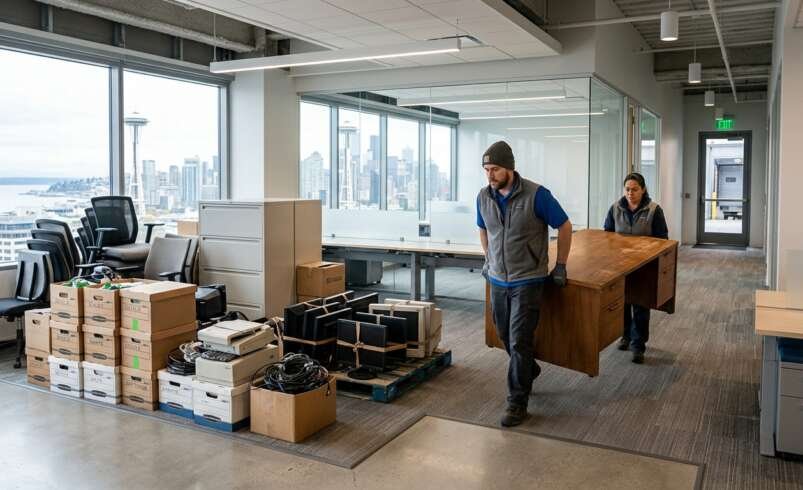

Office spaces naturally accumulate furniture, equipment, supplies, and other items over the years. Desks that are no longer needed, outdated chairs, damaged cabinets, unused computers, and old office equipment can gradually take up valuable workspace. When a company relocates, downsizes, renovates, or simply wants to improve organization, an office cleanout becomes an important part of the process.
Handling these items properly requires more than simply putting everything in a pile. Businesses need to determine what should be kept, donated, recycled, or removed. A structured approach can make an office cleanout safer, more efficient, and less disruptive to daily operations.
Start With a Complete Office Inventory
Before moving anything, walk through the entire office and create an inventory. Identify desks, chairs, filing cabinets, shelving, electronics, appliances, storage containers, and other items that are no longer required.
An inventory helps prevent useful equipment from being removed accidentally. It also gives the business a clearer idea of how large the cleanout will be.
Consider creating separate categories such as:
- Items to keep
- Items to relocate
- Items to donate
- Items suitable for recycling
- Items requiring removal
- Items that need special handling
This first step can make the entire Office Cleanout Seattle WA process easier to coordinate.
Decide Which Office Furniture Still Has Value
Old does not always mean useless. Some desks and chairs may still be functional even if they no longer fit the company’s current office design.
Inspect furniture before deciding what to do with it. Check for structural damage, broken components, stains, missing parts, or excessive wear.
Functional furniture may be donated, sold, reused in another workspace, or offered to employees. Items that are damaged beyond practical use may need professional removal.
Prepare Desks for Removal
Desks can be surprisingly difficult to move because of their size and weight. Before removing them, clear all drawers and storage compartments.
Remove personal documents, office supplies, and electronics. If the desk can be disassembled safely, consider separating its components to make transportation easier.
Make sure hallways and doorways are clear before moving large desks. Protect walls, floors, and door frames where necessary.
For businesses handling a larger Office Cleanout Seattle WA project, professional assistance can be useful when multiple large desks need to be removed from the same location.
Handle Old Office Chairs Carefully
Office chairs may appear easy to move, but large quantities can quickly become difficult to manage. Sort chairs according to their condition.
Good-quality chairs may be reused or donated. Broken chairs, damaged bases, torn upholstery, or chairs with missing components may require removal.
Avoid stacking unstable chairs in areas where they could fall or create a safety hazard. Keep walkways clear throughout the cleanout.
Sort Filing Cabinets and Storage Furniture
Filing cabinets, bookcases, shelving units, and storage furniture can contain important business records. Never assume that an empty-looking cabinet is actually empty.
Before removing storage furniture, check every drawer, shelf, and compartment. Sensitive documents should be handled according to the company’s document-retention and secure-destruction procedures.
Once all contents have been removed, inspect the furniture to determine whether it can be reused, donated, recycled, or hauled away.
Review Old Computers and Electronics
Office electronics require extra attention. Computers, monitors, printers, phones, networking equipment, and other electronic devices may contain company information.
Before disposing of or recycling electronics, businesses should follow appropriate data-security procedures. Important files should be backed up, and devices containing sensitive information should be securely wiped or handled through an appropriate electronics recycling or disposal channel.
Do not simply place old electronics with ordinary office waste without checking the applicable requirements.
Separate Recyclable Materials
An office cleanout may produce significant amounts of cardboard, paper, metal, and other potentially recyclable materials.
Separate these materials whenever practical. Recycling can reduce the amount of waste that requires disposal and may make the cleanout more organized.
However, businesses should verify local recycling requirements because accepted materials and preparation rules can vary.
Plan the Removal Route
Moving large office items through a building requires planning. Before starting, identify the safest route from the office to the loading area or exit.
Consider:
- Doorway dimensions
- Stairways
- Elevators
- Hallway width
- Building access rules
- Loading zones
- Parking restrictions
- Property-management requirements
Planning the route ahead of time can prevent delays and reduce the risk of property damage.
Schedule the Cleanout Around Business Operations
An office cleanout does not have to interfere heavily with normal business activity. Consider scheduling larger removal work during evenings, weekends, or other periods when fewer employees are present, if building rules and the service provider allow it.
For larger Office Cleanout Seattle WA projects, scheduling is particularly important because moving numerous desks, chairs, and equipment can temporarily affect access to different parts of the workplace.
Protect Important Information
Office cleanouts often involve more than physical clutter. Businesses may encounter contracts, invoices, employee records, customer information, old hard drives, and other sensitive materials.
Create a separate process for confidential documents and data-containing devices. Employees should know which materials require special handling before the cleanout begins.
This step helps protect the company while unwanted physical items are being removed.
Consider Donation and Reuse
Not everything removed from an office needs to become waste. Functional desks, chairs, shelving, and other items may still be useful to another organization.
Businesses can consider donating suitable furniture or offering reusable items to employees. Reuse can extend the useful life of products while reducing the amount of material requiring disposal.
Items that cannot reasonably be reused can then be separated for appropriate recycling or removal.
Know When Professional Help Is Useful
A small office may be able to handle a cleanout internally. Larger workplaces can face a different challenge, especially when they have numerous desks, chairs, cabinets, appliances, and other bulky items.
Professional hauling assistance can save employees from spending valuable work hours moving heavy materials. It can also provide a practical solution when the business does not have a suitable vehicle or enough personnel for the project.
For businesses looking for Office Cleanout Seattle WA assistance, D.H Services, LLC can be contacted to discuss local cleanout and hauling needs.
Create a Post-Cleanout Organization Plan
Once the unwanted furniture and equipment have been removed, take advantage of the newly available space.
Decide how the remaining office furniture should be arranged. Create designated storage areas, remove unnecessary boxes, and establish a system for handling future unwanted equipment.
A cleanout is most effective when it produces a lasting improvement rather than simply creating temporary empty space.
Final Thoughts
Handling old desks, chairs, and equipment during an office cleanout requires planning. Businesses should begin with an inventory, protect sensitive information, identify reusable items, separate recyclable materials, and plan the safest removal route.
Whether a company is relocating, downsizing, renovating, or simply clearing years of accumulated office clutter, an organized Office Cleanout Seattle WA project can make the transition much easier.
For local assistance, D.H Services, LLC is located at 300 Lenora St, Seattle, WA 98121, United States. Businesses can contact the company at +1 206-279-0300 to discuss their office cleanout and hauling requirements.
Frequently Asked Questions
1. What should I do with old office desks?
Inspect desks for damage and determine whether they can be reused, donated, recycled, or removed. Clear all drawers and compartments before moving them.
2. Can old office chairs be donated?
Functional office chairs may be suitable for donation or reuse. Damaged chairs should be evaluated for appropriate recycling or disposal options.
3. How should businesses handle old computers?
Businesses should protect their data before disposing of old computers. Back up important information and securely erase sensitive data before using an appropriate recycling or disposal method.
4. What is the best way to prepare for an Office Cleanout Seattle WA project?
Start by creating an inventory and separating items into keep, donate, recycle, and removal categories. Then confirm building access requirements and arrange the appropriate hauling or disposal services.
5. Can filing cabinets be removed during an office cleanout?
Yes, filing cabinets can generally be included in an office cleanout, but businesses should first check every drawer and properly handle any confidential documents they contain.
6. Should an office cleanout happen during business hours?
It depends on the size of the project and building policies. Larger cleanouts may be easier to schedule outside peak business hours to reduce disruption.
7. How can businesses make an Office Cleanout Seattle WA project more efficient?
Create an inventory, assign responsibilities, organize items before removal, clear pathways, protect sensitive information, and coordinate the hauling schedule in advance.
Contact Information
D.H Services, LLC
Address: 300 Lenora St, Seattle, WA 98121, United States
Phone: +1 206-279-0300