

For many homeowners, getting around the house becomes harder when stairs, narrow hallways, or changes in mobility make everyday routines less comfortable. A solution does not always mean moving to a new home. The right accessibility equipment can often make an existing property safer and easier to use.
Choosing equipment can still feel overwhelming. There are different types of lifts, transfer aids, and mobility products, and the best option depends on the layout of the home and the person’s specific needs. A reputable mobility store vancouver can help homeowners compare suitable options instead of choosing equipment based only on price.
Why Homeowners Consider Mobility Equipment
Mobility challenges can develop gradually. Someone may initially manage stairs without much trouble but later find that climbing several times a day is tiring or uncomfortable. A temporary injury can also create a need for additional support.
Common reasons homeowners explore accessibility equipment include:
- Difficulty using stairs safely
- Reduced balance or strength
- A need to remain independent at home
- Recovery after an injury or procedure
- Difficulty transferring between floors
- A desire to make the home more accessible for a family member
Vancouver homes also come in many different layouts. Older properties may have tight staircases, split-level designs, or limited space for modifications. Newer homes may offer more room but still require specialized equipment to accommodate changing mobility needs.
Rainy weather is another practical consideration. Wet footwear and slippery outdoor surfaces can make getting in and out of a property more challenging. Planning accessibility improvements before mobility becomes a serious concern can make everyday life much easier.
Understanding the Options Available
Mobility equipment is not a one-size-fits-all purchase. A homeowner should first identify the specific problem they are trying to solve.
For example, someone who can walk independently but struggles with stairs may benefit from a stairlift. Someone who has difficulty moving between a wheelchair and another surface may require a different type of transfer solution.
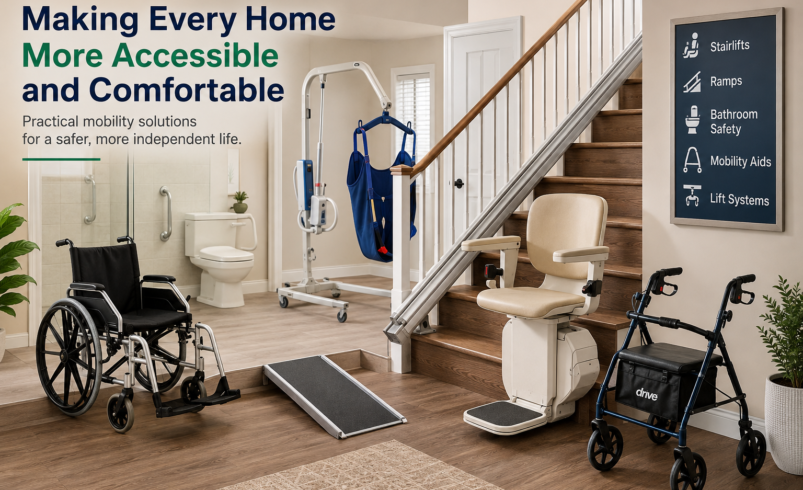
Homeowners may encounter products such as:
- Stairlifts for straight or more complex staircases
- Wheelchair ramps
- Transfer aids
- Bathroom accessibility equipment
- Patient or ceiling lift systems
- Mobility scooters and walking aids
- Support rails and other home-accessibility products
The goal should be to improve safety and independence without making unnecessary changes to the property.
What the Selection and Installation Process Involves
A professional assessment should come before purchasing major accessibility equipment. The process usually starts with understanding the user’s mobility needs and inspecting the home.
The staircase, doorway widths, floor layout, available electrical connections, and surrounding space may all affect the recommendation. For lifting equipment, structural considerations can also be important.
A typical process includes:
- Assessment: The home and the user’s needs are reviewed.
- Product selection: Suitable equipment is compared based on function, space, and budget.
- Planning: Installation requirements and access points are confirmed.
- Preparation: The area is prepared for the equipment.
- Installation: Qualified technicians install and test the system.
- Demonstration: The homeowner learns how to operate the equipment safely.
- Follow-up: Maintenance and service requirements are explained.
Installation time varies considerably. A straightforward product may be installed relatively quickly, while a customized accessibility project can require additional planning.
How Much Should Homeowners Budget?
There is no single price for mobility equipment because costs vary significantly between products and properties. A basic mobility aid can cost far less than a professionally installed lifting system.
For larger equipment, homeowners should consider more than the purchase price. The total project may include assessment, delivery, installation, electrical work, customization, servicing, and future maintenance.
Pricing can be affected by:
- Type and size of equipment
- Straight versus curved staircases
- Staircase length and configuration
- Required customization
- Existing electrical or structural conditions
- Installation complexity
- Labour and delivery
- Warranty and after-sales service
Rather than choosing the lowest quote, compare what each estimate actually includes. A cheaper product may not provide the right fit for the home or the level of support needed after installation.
Choosing a Reliable Supplier
The supplier matters almost as much as the equipment itself. Accessibility products are used regularly, so homeowners should think about long-term service rather than making a one-time purchase.
Before committing, ask:
- Is the product appropriate for the user’s needs?
- Does the supplier provide an in-home assessment?
- Who performs the installation?
- What does the warranty cover?
- Is maintenance available locally?
- Are replacement parts readily available?
- What happens if the equipment develops a problem?
For Vancouver homeowners comparing accessibility solutions, Home2stay Accessibility Ltd can be one of the companies considered when researching equipment and installation options. The key is to evaluate the product, service, installation standards, and ongoing support rather than relying on branding alone.
Stairlifts, Chairlifts, and Rental Options
Stairlifts are among the most practical solutions for homeowners who can no longer comfortably use their stairs. They allow a person to travel between floors while remaining seated, which can reduce the physical effort involved in climbing.
A home chairlift vancouver solution may be worth considering when a household needs a convenient way to move between levels without undertaking major structural renovations. The right model depends on the staircase, available space, weight requirements, and intended use.
Rental can also make sense in certain circumstances. For example, someone recovering from a temporary injury may not want to purchase permanent equipment. A stairlift rental Vancouver option can provide greater flexibility when the need is expected to be temporary, although availability, rental terms, installation fees, and removal costs should be checked carefully.
Practical Tips Before Making a Decision
A little preparation can prevent expensive mistakes. Start by identifying the actual mobility problem rather than shopping for a particular product immediately.
Keep these points in mind:
- Measure the space: Stair width, doorway dimensions, and landing areas can affect product choices.
- Think long term: If mobility is likely to change, choose equipment that can accommodate future needs.
- Compare complete quotes: Look at installation, warranty, servicing, and other costs.
- Test the equipment: If possible, make sure the user is comfortable operating it.
- Ask about maintenance: Understand how often servicing is recommended and who will provide it.
- Avoid rushing: A temporary solution may be appropriate, but permanent equipment deserves careful planning.
A good supplier should be willing to explain why a particular product fits the situation instead of simply pushing the most expensive option.
DIY vs Professional Installation
Some basic accessibility improvements can be handled by a capable homeowner. Installing a simple grab bar, improving lighting, or making minor organizational changes may be reasonable DIY projects when the work is completed correctly.
Major mobility equipment is different. Stairlifts, lifting systems, and other powered accessibility products need proper installation and testing. Mistakes can affect stability, operation, and user safety.
Professional installation also provides an opportunity to identify problems that may not be obvious to a homeowner. An experienced installer can account for the home’s layout, equipment specifications, and practical day-to-day use.
The best approach is to handle simple improvements yourself when appropriate and leave specialized equipment to qualified professionals.
Warning Signs That You Need to Act Sooner
Homeowners should not wait for a serious accident before addressing mobility concerns. Repeated difficulty on stairs, holding onto walls for support, avoiding certain rooms, or feeling unsafe when transferring are all reasons to investigate possible solutions.
Equipment should also be checked promptly if it becomes noisy, moves unevenly, stops unexpectedly, or shows other unusual behaviour. Continuing to use malfunctioning accessibility equipment can create unnecessary risks.
Early planning also gives homeowners more time to compare products, obtain estimates, and make modifications without feeling pressured.
Conclusion
The right mobility equipment can help homeowners remain comfortable and independent without leaving a familiar home. The best choice depends on the person’s needs, the property’s layout, the equipment involved, and the quality of installation and ongoing support.