

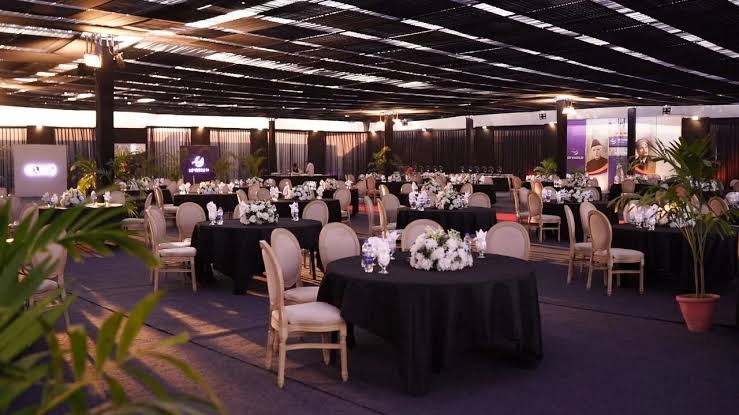

Corporate event planning in Islamabad isn’t simply a smaller version of what happens in Karachi or Lahore. The city’s administrative and diplomatic character introduces procedural layers (security coordination, protocol sensitivity, restricted venue access) that organizers unfamiliar with the city often underestimate. Understanding this upfront makes the difference between a smooth event and a stressful one.
Permissions Often Need to Be Considered Earlier Than Expected
Certain venues and event formats in Islamabad require security clearances or coordination with local authorities, particularly for large gatherings or events involving senior government or diplomatic attendees. Planning teams unfamiliar with the city sometimes treat this as a late-stage formality, when in reality it needs to be built into the timeline from the very start. A planner who raises this early, rather than after a venue is already booked, is signaling real local experience.
Venue Choice Depends Heavily on Who’s Attending
Islamabad’s venues split fairly clearly between corporate-focused business center spaces and more formal, protocol-sensitive venues suited to government or diplomatic functions. A product launch for a retail audience needs an entirely different setting from an investor briefing or a dealer meet. Matching venue formality to the actual audience has more impact on how an event is received than most first-time organizers expect.
Budget Planning Involves More Variables Than a Simple Quote Suggests
A realistic Islamabad event budget spans venue rental, catering, AV production, staffing, branding, and often permit-related costs specific to the city. Costs also shift with the season, since venue availability tightens during the city’s peak event months in autumn and spring. Organizations planning their first Islamabad event often underestimate staffing and AV costs in particular, since these scale with audience size faster than venue rental does.
Staffing Needs Are Frequently Underestimated
Conferences and multi-session corporate events need more coordination staff than most first-time clients budget for: registration management, floor coordinators, AV technicians on standby, and hospitality staff for VIP or diplomatic guests where relevant. Understaffing is one of the more common causes of a poorly run event, since small issues compound quickly without enough people managing the floor.
Realistic Timelines Run Longer Than Expected
For a mid-sized corporate event with custom branding and multiple sessions, a realistic planning window in Islamabad typically runs six to eight weeks at minimum, longer if permissions or diplomatic coordination are involved. Compressed timelines are possible but usually mean cutting corners somewhere: narrower vendor options, rushed fabrication, or skipped contingency planning.
Measurement Has Become Standard, Not Optional
Corporate clients increasingly expect events to produce measurable outcomes rather than just a well-executed evening. That typically means tracking attendance against invitations, capturing leads where relevant, and monitoring media or social coverage. Building measurement into the planning stage, rather than reconstructing it afterward, produces far more useful data.
The Bigger Picture
Corporate event planning in Islamabad carries more procedural weight than in most other Pakistani cities, largely because of the administrative and diplomatic context the city operates in. Organizations that account for permissions, realistic timelines, and adequate staffing from the outset tend to have noticeably smoother events than those that treat the process as a purely creative or logistical exercise. Marcem Events is one of the agencies that plans around these city-specific requirements rather than applying a generic process.