
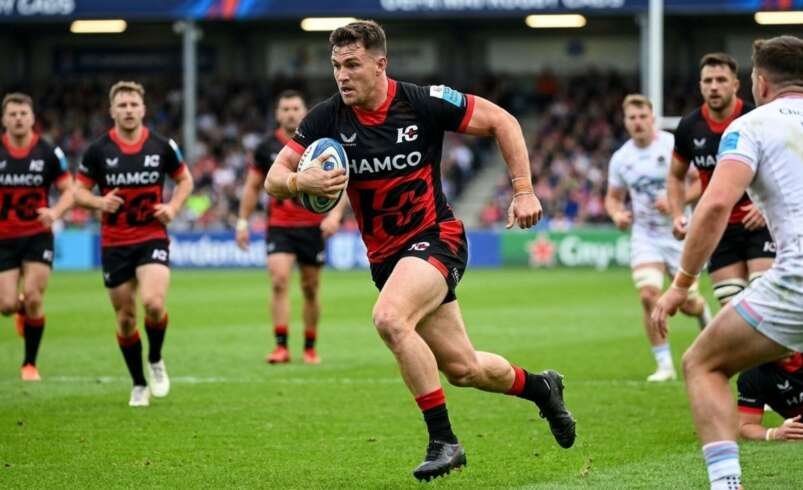

Most rugby clubs are not one team. They are a first side and a second side, an age grade section, often a women’s team, and a sevens squad in the summer. What usually happens is that each group sorts its own kit whenever it can afford to, from whoever was cheapest that year. Five seasons later the club has four slightly different reds, three versions of the crest, and a photo on the wall where nobody quite matches. Ordering custom rugby uniforms as a club rather than as separate teams fixes that, and it usually costs less too. Here is how to approach it.
One Identity, Every Side
The starting point is deciding that every team in the club wears the same identity. Same crest, same colors, same design language, from the under twelves to the first side. That consistency is what makes a club look like a club rather than a collection of teams that happen to share a ground.
It matters practically as well. Players moving up from age grade into senior rugby stay in the same visual identity, which reinforces that they are progressing within one club. Parents and sponsors see one organization. And when a photographer covers a club day, everything in frame belongs together.
Lock the Colors Down Properly
Here is the specific thing that causes the drift. Nobody ever writes down the exact shade. One order specifies red, the next specifies red, and the two arrive noticeably different because there is no such thing as one red.
Fix it by recording exact Pantone codes for every club color and using them on every future order. That single administrative step, taken once by whoever runs kit, is what keeps a club consistent for a decade rather than a season.
Order Together Where You Can
The most efficient approach is to consolidate. When several sides order at once, volume pricing improves as the total grows, and every team is produced in the same run, which guarantees the colors match rather than hoping they do. If your club can align its ordering to one or two points in the year, you get better pricing and better consistency at the same time.
Where clubs cannot consolidate, the fallback is just as important. Hamco Sports keeps your design on file, so a side ordering separately next season still receives the same design in the same Pantone matched colors as the team that ordered this year. There are no minimums either, which matters enormously for a club with a small women’s squad or a thin second side, since no group should be blocked from proper kit because it cannot hit a minimum quantity.
Match Kit Is Only Part of It
A club that looks properly turned out carries the identity beyond match day. Training tops take the daily wear so match shirts stay sharp for Saturdays. Shorts and socks in club colors finish the look rather than leaving players to source their own. And rugby polo shirts cover club events, travel, coaching staff, and tour, which is often where a club is seen by people who never come to a match.
None of this needs buying at once. Because the design is held on file, a club can add categories over seasons and everything still matches.
Differentiate Sides Without Breaking the Identity
If you want to distinguish teams, do it with small markers rather than different designs. A change of sock color, a discreet side designation on the shirt, or a different alternate for the sevens squad keeps sides identifiable while leaving the core identity intact. What you want to avoid is one side commissioning a completely different look, because that is where club consistency dies.
Keep the kit rules in mind while you plan too, since World Rugby Law 4 governs match kit and includes a no V neck rule for fifteens play. You can check the current standards through World Rugby.
Starting From Scratch
If your club is new, or a new section is forming within it, settle the name and identity before any team orders anything. A generator that produces random team names tuned to rugby gives you ten options per click, free with no account, so a new side can land on a name and design around it in one sitting rather than borrowing a placeholder that sticks.
Frequently Asked Questions
How do I stop club colors drifting between orders? Record exact Pantone codes for every club color and use them on every order, and keep your design on file with one maker.
Is it cheaper to order for several teams at once? Usually yes. Volume pricing improves as the order grows, and one production run guarantees the colors match.
What if a side is too small to hit a minimum? Hamco Sports has no minimums, so a small women’s squad or second side can order exactly what it needs.
How do I tell club sides apart? Use small markers like sock color or a discreet designation rather than a different design.
How do we name a new side? Use a free generator for random team names, shortlist a few, and let the players decide.
Conclusion
A rugby club looks like a club when every side wears the same identity. Agree one crest, one design language, and one set of exact Pantone colors, then order together where you can and rely on a design held on file where you cannot. Extend the identity into training tops, shorts, socks, and polos over time, and differentiate sides with small markers rather than separate designs. Hamco Sports supports all of it with Pantone matching, no minimums, and free mockups, so every team from the age grades to the first side matches. Ready to kit out the whole club? Start with Hamco Sports today.