

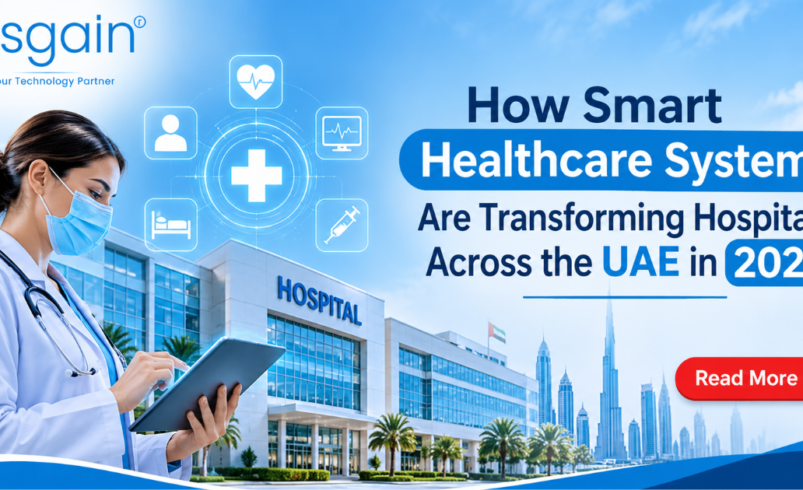

Across the United Arab Emirates, healthcare is changing faster than at any point in its history. Hospitals that once relied on paper charts and standalone departmental tools are now investing in connected platforms, cloud infrastructure, electronic health records, and virtual care channels. Artificial intelligence is moving from pilot projects into everyday clinical and administrative workflows, while patients increasingly expect the same convenience from their providers that they receive from banks and retailers.
Dubai and Abu Dhabi sit at the center of this shift. Both emirates have set ambitious national goals for modernizing medical infrastructure, attracting international patients, and improving the quality of care. Yet ambition alone does not guarantee success. Digital transformation is demanding, and providers must navigate operational complexity, technical limitations, and strict regulatory expectations at the same time. This article examines the most significant obstacles healthcare organizations face and the practical strategies that can help them move forward with confidence.
The stakes are high. A well-executed transformation can reduce waiting times, lower administrative burden, and give physicians better information at the point of care. A poorly executed one can disrupt clinical routines, frustrate staff, and expose sensitive data. Understanding the risks in advance is the first step toward avoiding them.
Understanding Digital Transformation in the UAE Healthcare Sector
What Digital Transformation Really Means in Healthcare
Digital transformation in healthcare is not simply the purchase of new software. It is a deliberate change in how an organization delivers care, manages information, and serves patients. It means replacing isolated, manual routines with connected processes in which clinical, administrative, and financial data move smoothly between teams.
From Traditional Operations to Connected Ecosystems
Traditional hospital operations often depend on separate systems for registration, billing, laboratory work, pharmacy, and imaging. A connected digital ecosystem links these functions so that a physician can view a patient’s history, test results, and prescriptions in one place. Electronic medical records, workflow automation, and patient-facing portals are the building blocks of this model.
Interoperability is the glue that holds everything together. Hospitals, clinics, laboratories, and pharmacies must be able to exchange information reliably if patients are to receive coordinated treatment. When that exchange works, care becomes more patient-centered: appointments are easier to arrange, duplicate tests are avoided, and clinicians can make decisions with a complete picture in front of them.
The UAE’s healthcare leaders recognize that this vision depends on more than technology. It also requires aligned processes, clear governance, and a culture willing to measure results honestly. Organizations that treat transformation as a continuous program, rather than a single project with a fixed end date, tend to adapt more successfully as patient needs and clinical practices evolve.
Major Digital Transformation Challenges Facing Healthcare Providers
Integration With Legacy Healthcare Systems
Many established facilities still operate software and hardware that were installed years ago. Connecting modern applications to this older infrastructure is rarely straightforward. Legacy platforms often use proprietary data formats, lack modern interfaces, and were never designed to communicate with external tools.
Data migration adds another layer of difficulty. Decades of patient records must be transferred accurately, and any compatibility error can lead to missing or corrupted information. Meanwhile, hospitals cannot pause care while engineers work. Integration must happen without interrupting emergency rooms, operating theaters, or outpatient clinics, which requires careful phasing, testing, and fallback planning. Parallel running of old and new platforms for a defined period is a common safeguard, although it temporarily increases the workload for staff who must record information twice.
Data Security and Patient Privacy Concerns
The more connected a healthcare environment becomes, the more entry points exist for attackers. Medical records are among the most valuable categories of personal data, which makes providers a frequent target for ransomware, phishing campaigns, and unauthorized access attempts. A single breach can expose sensitive diagnoses, damage patient trust, and trigger regulatory consequences.
Protection requires several layers working together. Encryption safeguards information in storage and in transit. Role-based access controls ensure staff see only what their duties require. Continuous monitoring helps security teams detect unusual behavior before it becomes a full incident. Because threats evolve constantly, these defenses must be reviewed and updated on a regular schedule rather than treated as one-time installations. Incident response plans, regular backups, and tested recovery procedures complete the picture, ensuring that operations can continue even when something goes wrong.
High Implementation and Maintenance Costs
Modernization is a significant financial commitment. Providers must fund infrastructure upgrades, licensing, software customization, and integration work. Those initial outlays are only part of the picture, since systems also need ongoing maintenance, security patches, user support, and periodic technology refreshes.
Budget pressure forces leadership teams to balance innovation against day-to-day operational needs. Spending too cautiously can leave an organization behind its competitors, while spending without a clear plan can produce expensive tools that staff rarely use. Successful organizations tie each investment to measurable outcomes such as shorter waiting times, reduced administrative effort, or improved billing accuracy. Phased rollouts can also spread expenses over time, allowing early results to justify further funding. Transparent cost tracking helps leadership identify hidden expenses, such as training hours and temporary productivity dips, before they strain budgets.
Healthcare Data Management and Interoperability Issues
Fragmented Patient Information
In many organizations, patient data is scattered across disconnected platforms. A person’s radiology images may sit in one system, laboratory results in another, and billing details in a third. Clinicians who need a full medical history must search several locations or request information by phone, which slows decisions and increases the chance of oversight.
Fragmentation also produces duplicate records and inconsistent entries. The same patient may appear under slightly different names or identifiers, leading to confusion over allergies, medications, or prior procedures. These inconsistencies undermine clinical confidence and make analytics unreliable. Hospital leaders who cannot trust their data struggle to measure performance, forecast demand, or plan resources, so the effects of fragmentation reach well beyond the clinic.
Lack of Seamless Data Exchange
Sharing information between departments, and especially between separate organizations, remains a persistent obstacle. Without standardized data formats and agreed exchange protocols, even well-designed systems struggle to understand one another. Interoperability depends on common standards so that a diagnosis recorded in one facility carries the same meaning when it arrives in another.
Integrated electronic health record and hospital management platforms address this problem by giving departments a shared source of truth. Organizations that want a tailored foundation for such integration often work with a healthcare software development company dubai that understands local clinical workflows and data-sharing expectations.
Challenges in Adopting AI and Advanced Healthcare Technologies
Limited Availability of High-Quality Healthcare Data
Artificial intelligence is only as good as the information it learns from. Incomplete, inconsistent, or poorly labeled records reduce the accuracy of predictive models and decision-support tools. Many providers discover that before they can benefit from advanced analytics, they must first clean, structure, and standardize their existing data. This groundwork is time-consuming, yet it determines whether later AI investments succeed.
Trust and Accuracy of AI-Powered Systems
Clinicians are right to be cautious about automated recommendations. An AI tool that produces an incorrect suggestion can affect diagnosis or treatment, so these systems need rigorous clinical validation before deployment. Human oversight must remain central, with physicians reviewing and confirming outputs rather than accepting them blindly. Transparent performance reporting helps medical teams understand where a tool performs well and where its limits lie, which in turn builds the trust necessary for adoption. Questions about accountability also arise, since organizations must decide who is responsible when an algorithm-assisted decision proves wrong. Clear policies for review, escalation, and documentation help address that concern before tools reach the bedside.
Skills and Infrastructure Gaps
Advanced technology demands specialized expertise, and qualified data scientists, integration engineers, and healthcare informatics professionals remain in short supply. Even where talent exists, staff need training to use new tools effectively and to interpret what they produce. Organizational readiness matters just as much as the software itself.
Infrastructure is a further hurdle. Machine learning workloads, imaging archives, and real-time monitoring all require dependable computing capacity, strong networks, and scalable storage. Facilities that underestimate these requirements often face performance problems that frustrate users and delay projects.
Telemedicine Adoption and Remote Patient Care Challenges
Virtual care has expanded access for patients who live far from major hospitals, travel frequently, or prefer to consult a doctor from home. Even so, delivering a consistent remote experience brings its own difficulties.
Technical barriers are the most visible. Unstable connections, poor video quality, and confusing interfaces can derail a consultation. Some patients, particularly older adults or those with limited digital experience, find virtual platforms hard to navigate, which raises concerns about accessibility and equity.
Integration is another concern. A telehealth platform that stands apart from the hospital’s core records forces clinicians to re-enter information and risks losing context between virtual and in-person visits. Remote patient monitoring adds further complexity, since connected devices such as glucose meters and wearable sensors must feed reliable data into clinical systems. Privacy must also be protected throughout, with secure sessions and careful handling of recorded information. Reliable digital infrastructure underpins all of this, because a virtual visit is only as dependable as the network, platform, and support team standing behind it. Providers evaluating a telemedicine app development company dubai typically look for proven experience in secure video, device connectivity, and integration with existing hospital systems.
Regulatory Compliance and Healthcare Technology Standards in the UAE
Understanding Dubai and Abu Dhabi Healthcare Regulations
Healthcare in the UAE operates under a layered regulatory framework. In Dubai, the Dubai Health Authority (DHA) oversees facility standards and health information requirements, while in Abu Dhabi the Department of Health (DoH) performs a similar role. Each authority issues its own policies, so organizations working across both emirates must understand the specific obligations that apply in each location.
Data privacy and security responsibilities are central to these rules. Providers are expected to protect patient information, control access appropriately, and handle data in ways that respect confidentiality. Because requirements can change, compliance teams need to follow official guidance closely rather than rely on assumptions.
Maintaining Compliance Across Digital Platforms
Compliance does not end at launch. Every digital platform must continue to manage patient information securely throughout its lifecycle. This includes defining where data is stored, who may access it, and how long it is retained.
Audit trails are especially valuable. Detailed logs of who viewed or changed a record make it possible to investigate incidents and demonstrate accountability to regulators. Thorough documentation supports the same goal. Regular compliance assessments help organizations identify gaps early, correct them quickly, and keep pace with evolving standards. Treating compliance as an ongoing discipline, rather than a checklist completed once, reduces risk considerably. Appointing a dedicated compliance lead who works closely with technical teams ensures that regulatory requirements are considered during design, not discovered after launch.
Workforce Resistance and Digital Skills Development
Technology succeeds or fails through the people who use it. Doctors, nurses, administrators, and technicians who have followed familiar routines for years may view new systems as an added burden. Concerns about slower workflows, unfamiliar screens, or job security are natural and deserve honest attention.
Moving from manual to automated processes is rarely smooth. Digital literacy also varies widely within healthcare teams, so some employees adapt quickly while others need considerable support. Without that support, adoption stalls and expensive systems are underused.
Continuous training and structured change management make the difference. Short, role-specific sessions, accessible help resources, and visible leadership backing all encourage acceptance. Collaboration between clinical and IT staff is equally important. When medical professionals help shape requirements and test early versions, the resulting tools fit real workflows and gain trust much faster. Recognizing early adopters as internal champions can also encourage hesitant colleagues, since peers are often more persuasive than formal announcements.
Strategies to Overcome Healthcare Digital Transformation Challenges
Develop a Clear Digital Transformation Roadmap
A roadmap begins with an honest assessment of organizational needs and technology priorities. Leaders should define what they want to achieve, set measurable goals, and sequence projects in a realistic order. Clear milestones allow progress to be tracked and adjustments to be made before small problems become costly ones. A good roadmap also assigns ownership, so that every initiative has a named leader accountable for budget, timeline, and results.
Invest in Customized and Scalable Healthcare Platforms
Off-the-shelf products rarely match the specific workflows of every hospital. Choosing technology that reflects how clinicians actually work reduces friction and improves adoption. Scalability is equally important, because patient volumes, regulations, and clinical needs will keep changing. Flexible architectures allow new modules and integrations to be added without rebuilding the entire system. Many organizations turn to a custom healthcare software development company in uae to design platforms around their own processes and growth plans.
Strengthen Data Security and Compliance
Security should be built into every project from the start. Establish strong data protection practices, including encryption, access management, and staff awareness training. Conduct regular security and compliance assessments so that vulnerabilities are found and addressed proactively rather than after an incident. Simulated attacks and staff drills are valuable too, because they show how people and systems respond under pressure and where procedures need improvement.
Prioritize Integration and Interoperability
Connect existing systems through standardized interfaces instead of leaving them as isolated islands. Improving information exchange across departments shortens delays, reduces duplicate work, and gives clinicians more complete information. Interoperability should be treated as a requirement from the earliest planning stage, not an afterthought. Pilot projects between two departments can reveal practical obstacles early, giving teams a chance to refine standards before expanding across the organization.
Choosing the Right Healthcare Technology Partner
The right partner can shorten timelines and reduce risk, while the wrong one can leave an organization with fragile systems and unmet expectations. Begin by evaluating relevant healthcare software development experience, including examples of similar projects delivered successfully.
Review the partner’s ability to customize solutions and integrate with existing platforms. Assess their understanding of security practices and regulatory obligations, since a technical team unfamiliar with healthcare compliance can introduce serious problems. Consider scalability and the quality of long-term support, because systems require updates and improvements well beyond the first release. Ask to speak with existing clients, and request clear descriptions of how the team handles testing, documentation, and knowledge transfer. Finally, prioritize teams that understand the UAE healthcare ecosystem. Local knowledge shortens learning curves and helps solutions fit regional expectations. A reputable healthcare software solution provider in dubai can offer that combination of technical depth and market familiarity.
Future Outlook: What Lies Ahead for Digital Healthcare in the UAE?
AI-Driven Healthcare Operations
Predictive analytics will help hospitals anticipate admissions, manage staffing, and identify patients at risk before conditions worsen. Clinical decision support tools will assist physicians with evidence-based suggestions, while intelligent automation takes over repetitive administrative work and frees staff to focus on patients.
Connected and Interoperable Healthcare Ecosystems
Seamless data sharing will allow patients to move between providers without repeating tests or re-explaining their history. Integrated information systems will give clinicians a reliable, up-to-date view of each person’s health, supporting better coordination and safer care.
Expansion of Remote Healthcare Services
Telemedicine, wearable devices, and remote patient monitoring will continue to grow. Patients with chronic conditions will be monitored from home, and routine consultations will increasingly take place online, extending quality care to more people while easing pressure on physical facilities. Together, these developments point toward a healthcare system that is more proactive, personalized, and accessible than the one most patients know today.
Contact SISGAIN Technologies today! to simplify digital transformation and improve healthcare operations.
Conclusion:
Digital transformation offers tremendous promise for healthcare in Dubai and Abu Dhabi, but the path is not without obstacles. Legacy systems, fragmented data, security threats, regulatory demands, cost pressure, and workforce resistance all require thoughtful planning to overcome.
Cybersecurity, interoperability, and staff readiness form the foundation of any successful program, and customized, scalable technology ensures that investments continue to deliver value as needs evolve. Organizations that approach transformation strategically, with clear goals and trusted partners, will be best placed to build sustainable, patient-centered healthcare services across the UAE. The journey is demanding, but the rewards are lasting: safer care, more satisfied patients, and healthcare teams empowered by tools that genuinely support their work. Providers that begin planning today, learn from early obstacles, and stay committed to continuous improvement will lead the next chapter of the UAE’s healthcare story.
Frequently Asked Questions
Q1. What are the biggest digital transformation challenges in healthcare?
The most common challenges include integrating legacy systems, protecting data, managing implementation costs, achieving interoperability, and preparing the workforce. Each affects the others, so successful organizations address them together within a single, coordinated plan. Starting with a thorough assessment of current systems, risks, and staff readiness makes every later decision easier to justify.
Q2. Why is healthcare digital transformation important in Dubai and Abu Dhabi?
Digital technologies improve operational efficiency, strengthen patient engagement, and enable connected healthcare services. They also help both emirates meet rising patient expectations and support their broader goals for modern, high-quality care. Connected services also make it easier to welcome international patients and coordinate care across multiple facilities, strengthening each emirate’s reputation as a regional healthcare destination.
Q3. How can healthcare providers improve data security?
Providers should use encryption, strict access controls, continuous security monitoring, and regular assessments. Staff training and sound compliance practices are equally important, since human error remains a leading cause of breaches. Regular drills and clear reporting strengthen readiness.
Q4. Why do hospitals need customized healthcare software?
Customized platforms reflect the specific workflows, integration needs, and growth plans of each organization. They scale more easily, fit clinical routines more naturally, and reduce the workarounds that generic products often force on staff.
Q5. How is telemedicine changing healthcare delivery in the UAE?
Virtual consultations and remote patient monitoring improve accessibility and support continuity of care. Patients can receive guidance without traveling, while clinicians can track conditions between visits.