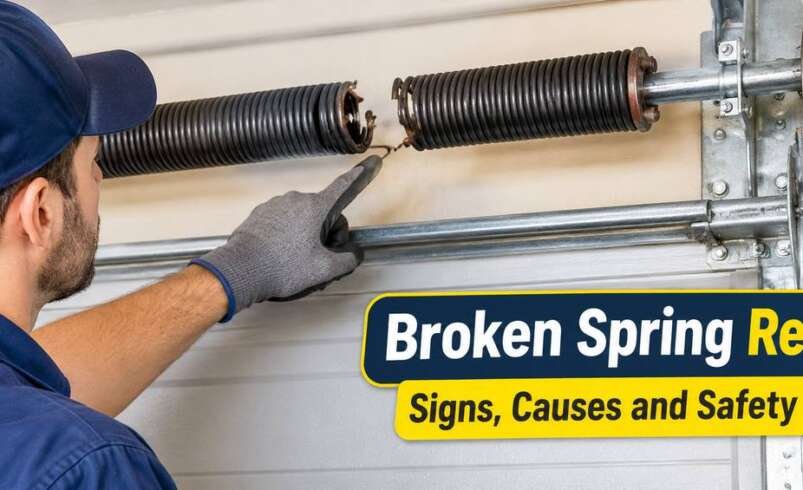

A garage door relies on a properly balanced spring system to operate safely and efficiently. When a spring breaks, the door may become difficult to lift, move unevenly, or stop functioning completely. Understanding Broken Spring Repair helps homeowners recognize mechanical problems before they lead to additional damage. In Irvine, where residential garages are frequently used for vehicle access and storage, maintaining the spring system is an important part of overall garage door maintenance. Knowing how springs work, why they fail, and when replacement is necessary can help homeowners make informed decisions.
Understanding the Role of Garage Door Springs
Garage door springs counterbalance the door’s weight, allowing it to open and close with less effort. They reduce the workload placed on the automatic opener and help maintain controlled movement throughout the operating cycle.
Torsion Springs
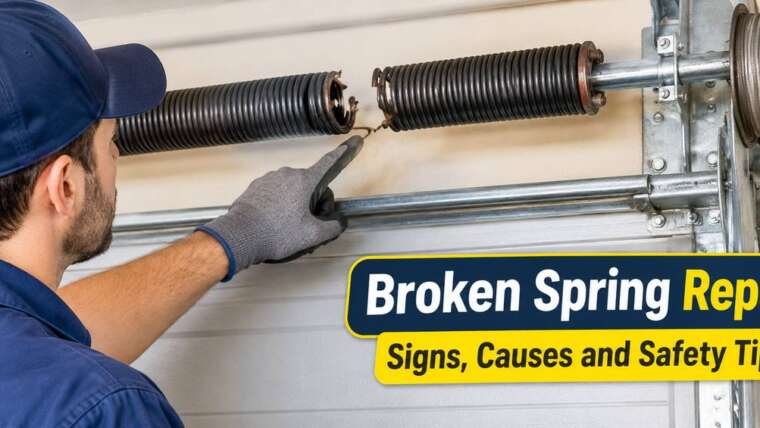
Torsion springs are generally installed above the garage door opening on a metal shaft. They store energy by twisting when the door closes and release that energy when it opens. These springs are designed to handle substantial mechanical stress over repeated cycles.
Extension Springs
Extension springs are commonly positioned along the horizontal tracks on both sides of the garage door. They stretch as the door closes and contract as it opens. Safety cables are used with these systems to help contain a spring if it breaks.
Both types require correct sizing and installation to maintain proper door balance.
Common Warning Signs of a Broken Garage Door Spring
Recognizing spring damage early can help prevent further strain on the garage door system. Several symptoms may indicate that a spring needs professional attention.
Unusual Banging or Snapping Sounds
A sudden loud bang from the garage may indicate that a spring has broken. The noise occurs when stored mechanical energy is released. Some homeowners describe it as sounding like a heavy object falling.
Garage Door Will Not Open Properly
When a spring breaks, the garage door opener may struggle to lift the door. The door might move a few inches and stop, or the opener may operate without successfully raising the door.
Visible Damage or Gaps
A noticeable gap between the coils of a torsion spring is a common indication of breakage. Extension springs may appear detached, stretched, or damaged. However, not all spring problems are visible from a distance.
Uneven Door Movement
If the garage door appears crooked or moves unevenly, a damaged spring or lifting cable may be responsible. Continuing to operate an unbalanced door can increase stress on other components.
What Causes Garage Door Springs to Break?
Garage door springs gradually weaken because of repeated use. Each complete opening and closing sequence counts as one operating cycle. Over time, this repeated movement reduces the spring’s ability to maintain the required tension. Understanding how garage door components wear out over time can help homeowners recognize the importance of regular inspection and maintenance.
Other contributing factors include corrosion, improper installation, incorrect spring sizing, and insufficient maintenance. Moisture can encourage rust, weakening the metal and increasing the possibility of premature failure.
Temperature fluctuations can also influence metal components, although repeated mechanical stress is generally a major factor in normal spring deterioration.
Why Timely Broken Spring Repair Is Important
A broken spring affects more than the garage door’s ability to open. It can place additional pressure on the opener, lifting cables, rollers, and other connected hardware. If the door becomes unbalanced, its movement may also become unpredictable.
Broken Spring Repair requires careful attention because garage door springs contain significant stored energy. Attempting to remove or adjust a damaged spring without suitable training and equipment can cause serious injuries.
Homeowners researching Irvine garage door spring replacement should understand that the correct replacement depends on the door’s weight, dimensions, spring type, and operating requirements. Choosing a spring based only on its appearance can result in improper balance and unnecessary mechanical strain.
A proper inspection should include:
Identifying the spring type and specifications.
Checking the condition of lifting cables and drums.
Examining brackets, bearings, and rollers.
Assessing the garage door’s overall balance.
Testing the opener and relevant safety features after servicing.
These checks help identify related problems that might otherwise remain unnoticed.
Safety Precautions When a Garage Door Spring Breaks
When spring damage is suspected, homeowners should avoid operating the door until it has been inspected.
Stop Using the Garage Door Opener
Repeatedly activating the opener can strain its motor and potentially damage other components. Avoid testing the door to see whether it will open.
Keep People Away From the Mechanism
Keep children, pets, and vehicles away from the affected area. A partially open or unbalanced door may move unexpectedly.
Avoid Attempting DIY Replacement
Never loosen spring brackets, wind torsion springs, or remove tensioned components without professional training. Even an apparently small adjustment can release dangerous mechanical energy.
How to Extend the Life of Garage Door Springs
Although spring failure cannot always be prevented, regular maintenance can help identify developing issues.
Arrange periodic inspections of springs and connected hardware.
Follow manufacturer recommendations for lubrication.
Pay attention to unusual noises and changes in door movement.
Keep garage door tracks free from dirt and obstructions.
Avoid adding extra weight to the door without checking system compatibility.
Address minor mechanical problems before they affect other components.
Consistent maintenance supports reliable operation and may reduce the likelihood of unexpected breakdowns.
Conclusion
Garage door springs are essential for maintaining proper balance and controlled movement. Loud snapping noises, visible spring gaps, difficulty opening, and uneven movement are common signs of possible spring failure. Broken Spring Repair should involve appropriate replacement specifications, a thorough inspection of connected components, and safe operational testing. By recognizing warning signs and avoiding unsafe adjustments, Irvine homeowners can protect their garage door systems and maintain safer everyday operation.